
Syracuse and the surrounding Onondaga County area
Masonry Cleaning, Efflorescence and Sealing in Syracuse
Find out what the white bloom, the staining or the clouded surface on your masonry is reporting, and whether cleaning or sealing is worth paying for at all.
Masonry Cleaning and Sealing quote
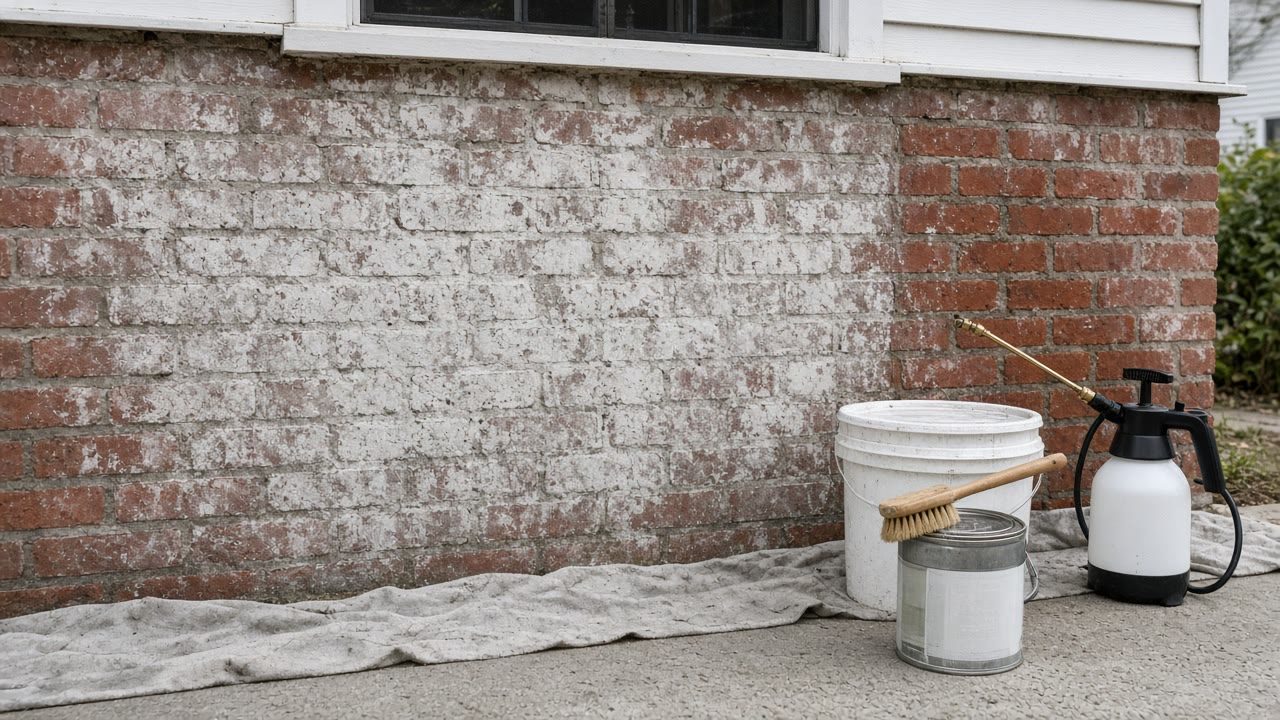
Send a photograph of the bloom or the stain and tell us roughly how old the masonry is. A fair share of the time the honest answer is to wait one season, and that is the answer you will get.
Would you rather talk it through? Call (315) 640-3590, answered 24/7.
$100 off your first job
Credited by us on your first booked job.
- One credit per customer per property, on your first booked job.
- Valid through December 31, 2026.
Mention this offer when you book. Full terms.
What the white bloom on your masonry is reporting
Cleaning and sealing is surface work on masonry that is otherwise doing its job. The usual reason for the call is efflorescence, the white bloom that appears on brick, stone and paving, and the Brick Industry Association sets out the three conditions it needs all at once: soluble salts present within or in contact with the masonry, a source of water in contact with those salts long enough to dissolve them, and a pore structure that lets the solution travel to a surface where the water can evaporate. Washing removes the mark and changes none of the three, so the first task on any bloom is working out which condition can be removed, and in practice that is nearly always the water. The same technical note adds that the assumption the brick caused it is usually wrong, because the soluble compounds most often come from the materials in contact with the brick: mortar, grout, concrete masonry, concrete or soil. Sealing is a separate decision and a separate product from a joint sand stabilizer.
- Dating the bloom: new building bloom under a year old, or recurring efflorescence that is reporting a water path
- Washing efflorescence and general soiling from brick, stone and concrete paver surfaces
- Removing organic growth, leaf tannin and rust marking from paving and steps
- Joint sand replacement, and joint sand stabilizer where sand is washing out of the joints
- Breathable penetrating sealer where the darker, richer look is what you are buying
- Removing or re-dissolving a sealer that has clouded over a damp base
- Looking for the water path first, on masonry where the bloom keeps returning in the same place
What decides whether cleaning or sealing is worth buying
Whether this is a wash worth buying or a water problem wearing a stain comes down to a handful of things, and you can check most of them yourself before you call anyone.
How old the masonry is
There is a clear line at one year. Efflorescence on brickwork less than a year old is new building bloom, appears fairly uniformly across the wall, is put down to normal evaporation of construction water, and in most cases dissipates over time if the masonry is allowed to dry and wind and rain are given the chance to clean it. Beyond a year it is generally attributed to excessive water penetration or poor drainage, and is often worst in winter and cold weather.
Which of the three conditions you can actually remove
Salts, water and a pore structure that lets the solution reach the surface. You cannot remove the pore structure and you very rarely remove the salts, because they usually come from the mortar, grout, concrete or soil in contact with the units rather than from the brick. That leaves the water, which is why a wash without a water answer buys you the same wash next spring.
Whether there is a salt source under the paving
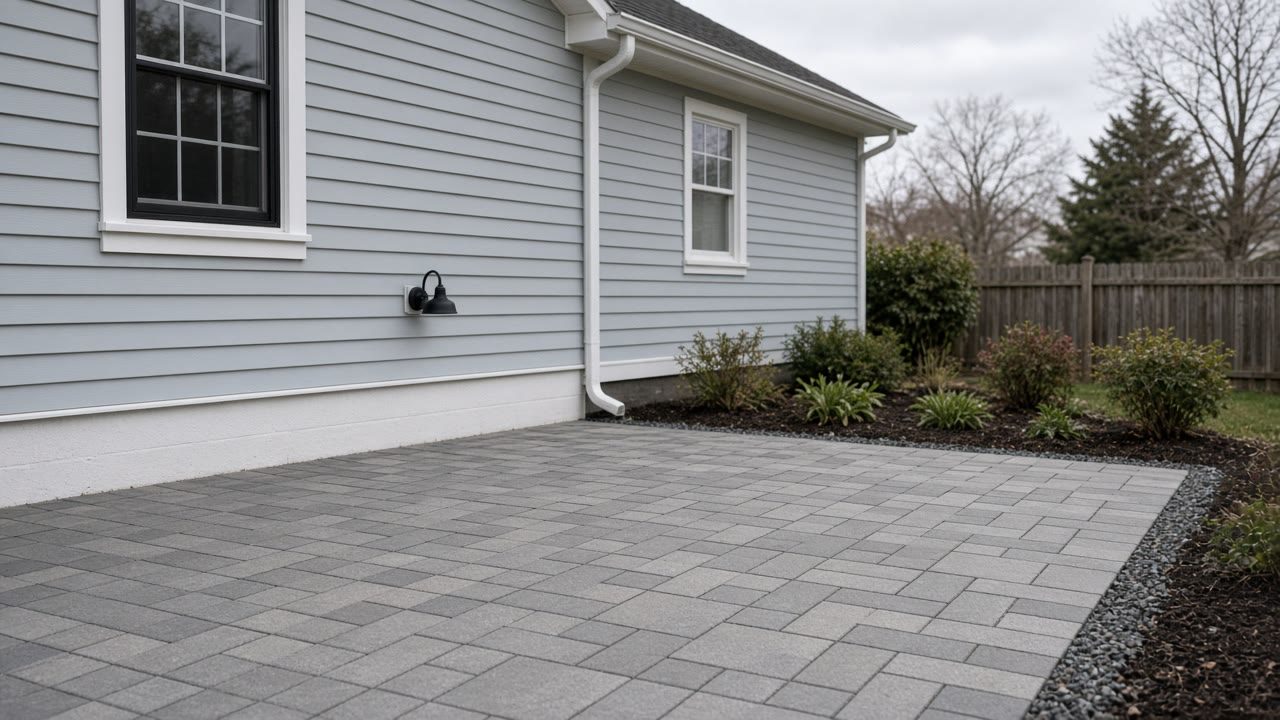
The hardscape sealing guidance names a source of efflorescence in the bedding sand, the base or the soil, migrating up through the joint sand or the pavers, as one of the specific conditions under which a sealer will whiten. On paving, what is under the stone decides what appears on top of it.
Whether the base under the paving drains
The same guidance states that if the base drains poorly, or the sealer is applied over saturated joint sand, or it is applied too thick, the sealer can turn cloudy and diminish the appearance of the pavers, and then it has to be removed or re-dissolved. A cloudy sealed patio in this metro is usually a drainage problem wearing a sealer, and removing a failed one costs more than applying it did.
Whether the product lets the masonry dry outward
A non-breathable coating is one of the named whitening conditions on paving, and on brick it is worse than cosmetic. Applying a coating to brickwork that tends to effloresce, without stopping the cause, can stop salts at the inner margin of the coating, usually 1/8 to 1/4 inch below the surface, where the water leaves as vapor and the salts crystallize inside the unit. Those crystals can develop pressures great enough to spall the brick, which is why coatings are not recommended as the sole treatment for efflorescence.
The month, and the forecast for the week after
Masonry should not be washed during freezing weather or when freezing weather is expected, because most cleaning methods saturate the masonry and that water can freeze on or inside it. The recommendation is to use water-based cleaning only when the ambient temperature will be 40F or above and will stay there until the masonry is dry. At Syracuse the normal daily minimum is at or above 40F in exactly six months, May through October, and October is the wettest month of the year at a normal 3.89 inches.
What the surface actually is
Brick, natural stone, cast stone and concrete pavers do not take the same cleaner or the same sealer, and the wrong product on the wrong surface is the one failure here that costs more to undo than the original work cost to buy.
Whether anything has been applied before
An existing coating changes what can go on top of it, whether the masonry can still dry outward, and whether the honest first step is stripping rather than sealing.
Send a photo before you book a wash
The age of the masonry decides whether this is worth paying for at all. One message is enough to find out.
How a wash should run: diagnosis before product
Date the bloom before anyone prices a wash
Under a year and fairly even across the face points to new building bloom, which usually needs patience rather than money. Older than a year, or returning to the same patch, points at a water path, and that is a different purchase entirely.
Find the water
Which of the three conditions is removable, and where the source is. Roof and gutter discharge, splash-back, a planting bed against the wall, a base that holds water under paving, a missing clearance at the bottom of a veneer wall. The salts are usually coming from mortar, concrete or soil in contact with the masonry, not from the units.
Put it in writing, small job or not
General Business Law section 770(3) defines home improvement as repairing, remodeling, altering or improving residential property, and names patios, terraces and landscaping. A wash is a small contract and the same entitlements apply: start and substantial completion dates under section 771(1)(b), and notice of your right to cancel in writing until midnight of the third business day after signing under 771(1)(h).
Test-clean a small area, then let it dry
One patch, out of the main sightline, at the strength and method proposed for the whole surface. What it looks like dry is the only result that counts, and the difference between wet and dry on masonry is considerable.
Clean in the warm half of the year
Ambient temperature at 40F or above, staying there until the masonry is dry. A late autumn wash that cannot dry before the first freeze risks both freeze damage and fresh bloom, which is the opposite of what was bought.
Let it dry properly before any sealer goes near it
Surface and joints not dry, and pavers without an adequate period of exposure to moisture, are two of the named conditions under which a sealer whitens. Waiting is free. Removing a clouded sealer is not.
Decide about sealing last, and deliberately
Most sealers darken the surface and enhance its color, add protection from stains, oils, dirt and water, and need reapplication after a period of wear and weather, with the interval depending on use, climate and the product. That is an appearance decision with a cycle attached. If the actual complaint is sand washing out of the joints, the right product is a joint sand stabilizer instead.
Pay on completion, or against a written schedule
Where a deposit is taken, section 771(1)(f) requires the payment schedule in dollars and cents against a named state of completion, and 771(1)(e) requires notice that money taken before completion goes into a Lien Law deposit or is covered by a bond, a contract of indemnity or an irrevocable letter of credit.
What masonry cleaning and sealing looks like
What cleaning and sealing can and cannot fix
When you may not need this at all
- If your masonry is under a year old and blooming fairly evenly across the whole face, that is new building bloom. It is attributed to normal evaporation of construction water and in most cases it dissipates on its own once the masonry is allowed to dry, with wind and rain doing the cleaning. Waiting one season costs nothing and very often ends the problem.
- If the bloom keeps coming back in the same patch, do not buy another wash. Efflorescence appearing more than a year after construction is generally attributed to excessive water penetration or poor drainage, so cleaning that patch every spring is paying to treat a symptom and paying again next year.
- Sealing is optional, and mostly it is about how the surface looks. It darkens the color, it adds protection from stains and dirt, and it has to be redone. No part of that is maintenance you are obliged to buy.
- If sand washing out of the joints is your real complaint, the product you want is a joint sand stabilizer rather than a surface sealer. Asking for the right one saves you a whole reapplication cycle.
- Do not book a wash for late autumn. Water-based cleaning saturates the masonry and the guidance is to clean only when the temperature will be 40F or above and will stay there until it dries. Book it for May through September instead.
- If the bloom is on an older solid brick wall whose joints are soft or crumbling, cleaning is the wrong purchase and a pressure wash can make it worse. That wall needs a repair trade, and we would rather tell you that than sell you a wash.
What is out of scope
- Repointing, tuckpointing and replacing brick or stone units. Cleaning does not repair a joint, and washing a wall with open joints drives water into it.
- Chimney work of any kind.
- Stopping the water. Roof, gutter, downspout, grading, flashing and drainage corrections are what actually end recurring efflorescence, and each one is its own trade.
- Paint, stain, opaque coatings, whitewash and limewash. None of those is sealing, and all of them change how the masonry dries.
- Pressure washing wood, vinyl siding, roofs, decks and fencing.
- De-icing salt marks on a surface that is still being salted every winter.
- Any opinion on whether a coating already present on your masonry was the right product, beyond what is visible from the surface.
Towns where we arrange cleaning and sealing
- Masonry Cleaning and Sealing in Cicero
- Masonry Cleaning and Sealing in Clay
- Masonry Cleaning and Sealing in Manlius
- Masonry Cleaning and Sealing in DeWitt
- Masonry Cleaning and Sealing in Syracuse
- Masonry Cleaning and Sealing in Salina
- Masonry Cleaning and Sealing in North Syracuse
- Masonry Cleaning and Sealing in East Syracuse
- Masonry Cleaning and Sealing in Liverpool
- Masonry Cleaning and Sealing in Camillus
- Masonry Cleaning and Sealing in Marcellus
- Masonry Cleaning and Sealing in Skaneateles
- Masonry Cleaning and Sealing in Baldwinsville
Efflorescence and sealing questions
There is white powder on my new brick. Is something wrong?
Usually not. White powder on new masonry is a water report rather than a defect report. Efflorescence needs three things at once: soluble salts in or touching the masonry, water in contact with them long enough to dissolve them, and a pore structure that lets the solution reach a surface where the water can evaporate. On brickwork under a year old, appearing fairly uniformly across the wall, it is called new building bloom, it is put down to normal evaporation of construction water, and in most cases it dissipates on its own if the masonry can dry and the weather is left to clean it.
Should I seal my patio?
Only if you want what a sealer gives you. Most sealers darken the surface and enhance its color, and they add protection from stains, oils, dirt and water. They also need reapplication after a period of wear and weather, with the interval depending on use, climate and the quality of the product. So it is an appearance choice with a cycle attached, not a one-time upgrade to the patio. If the problem you are trying to solve is sand leaving the joints, ask for a joint sand stabilizer instead, which is a different product doing a different job.
Will sealing stop the white bloom?
No, and it can make things worse in a way that is documented. Applying a coating to brickwork that tends to effloresce, without stopping the cause, can trap the salts at the inner margin of the coating, typically 1/8 to 1/4 inch below the surface: the water leaves as vapor through the treated zone and the salts crystallize inside the unit. That is subflorescence, and the pressures involved can be great enough to spall pieces off the brick. The technical guidance is explicit that coatings are not recommended as the sole treatment for an efflorescence problem. Fix the water, then decide about sealing.
Why did my sealed patio turn cloudy?
One of a short list of named reasons, and most of them are moisture. The surface and joints were not dry, the pavers had not had an adequate period of exposure to moisture, there is a source of efflorescence in the bedding sand, base or soil migrating up through the joints, the base drains poorly, the sealer was not breathable, or it was applied too thick. The fix is removing or re-dissolving the sealer, which costs more than applying it did. On a patio here, a cloudy seal is usually a drainage problem wearing a sealer, so the money is better spent under the pavers.
When can masonry be washed in Syracuse?
In the warm half of the year. Masonry should not be cleaned during freezing weather or when freezing weather is expected, because most cleaning methods saturate the masonry and that water can freeze on or inside it. Water-based methods are recommended only where the ambient temperature will be 40F or above and will remain so until the masonry is dry. At Syracuse the normal daily minimum is at or above 40F in exactly six months, May through October, and October carries a normal 3.89 inches of precipitation, the wettest month of the year, so late October is a poor bet for anything that has to dry.
It comes back every spring in the same place. What should I do?
Buy a look at the water rather than another wash. Efflorescence more than a year after construction is generally attributed to excessive water penetration or poor drainage, and it is often at its worst in winter and cold weather, which is exactly when a recurring patch shows up. Look at where water is arriving: gutter and downspout discharge, splash-back off paving, a bed banked against the bottom of a wall, a veneer base with no clearance, or a paved area holding water. Treating the arrival point is the only version of this that ends.
The joints between my bricks are crumbling as well as blooming. Same job?
No, and this is the one where we would rather send you elsewhere. Soft, open or crumbling joints are a repair question, and cleaning a wall in that condition can drive water straight into it. Get the joints looked at by a trade that repairs old masonry first. Cleaning, if you still want it, belongs after that work and not before.
Show us the bloom
A photograph and the age of the masonry. There is no obligation, and if waiting a season is the right answer we will tell you so.