
Syracuse and the surrounding Onondaga County area
New Masonry in Syracuse: Stone Veneer, Paver Patios and Fire Features
Every quote you get for new masonry shows you the stone. The two things that decide whether it survives a Syracuse winter are in no photograph: the month it is built in, and what sits behind and beneath it. Tell us what you want built and which town it is in, and we will put it in front of licensed, insured contractors who answer both of those in writing before you choose.
Request a Quote
Share a few details so we can confirm coverage and arrange the right next step.
Would you rather talk it through? Call (315) 640-3590, answered 24/7.
$100 off your first job
Credited by us on your first booked job.
- One credit per customer per property, on your first booked job.
- Valid through December 31, 2026.
Mention this offer when you book. Full terms.
Four builds, and they are not four sizes of one job
Pick the one you are actually asking for and its page tells you what decides the price. Two of these are assemblies with a water path written into the code, one is a footing question settled by your own town, and one is surface work on masonry that is otherwise doing its job. They read differently because they fail differently: a veneer wall and a paver patio have almost nothing in common below the surface, and in both cases the quote is mostly about the part that gets covered up.
Stone and Brick Veneer Installation
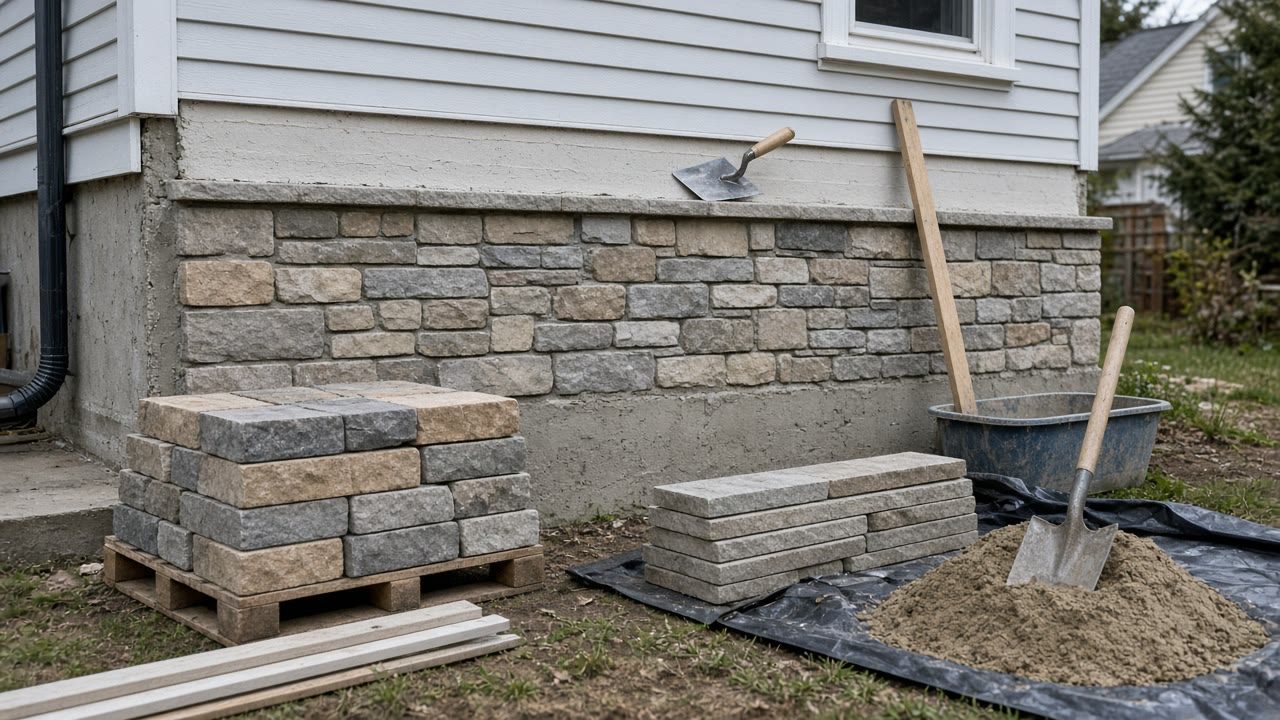
Put stone or brick veneer on a wall, chimney chase, column or foundation face, with the barrier, flashing and weep screed behind it built as a drainage path rather than as a finish.
Start here if you want stone on a wall, a chimney chase, a column or the block band below your siding.
About Stone Veneer →Paver Patios, Walkways and Stone Steps
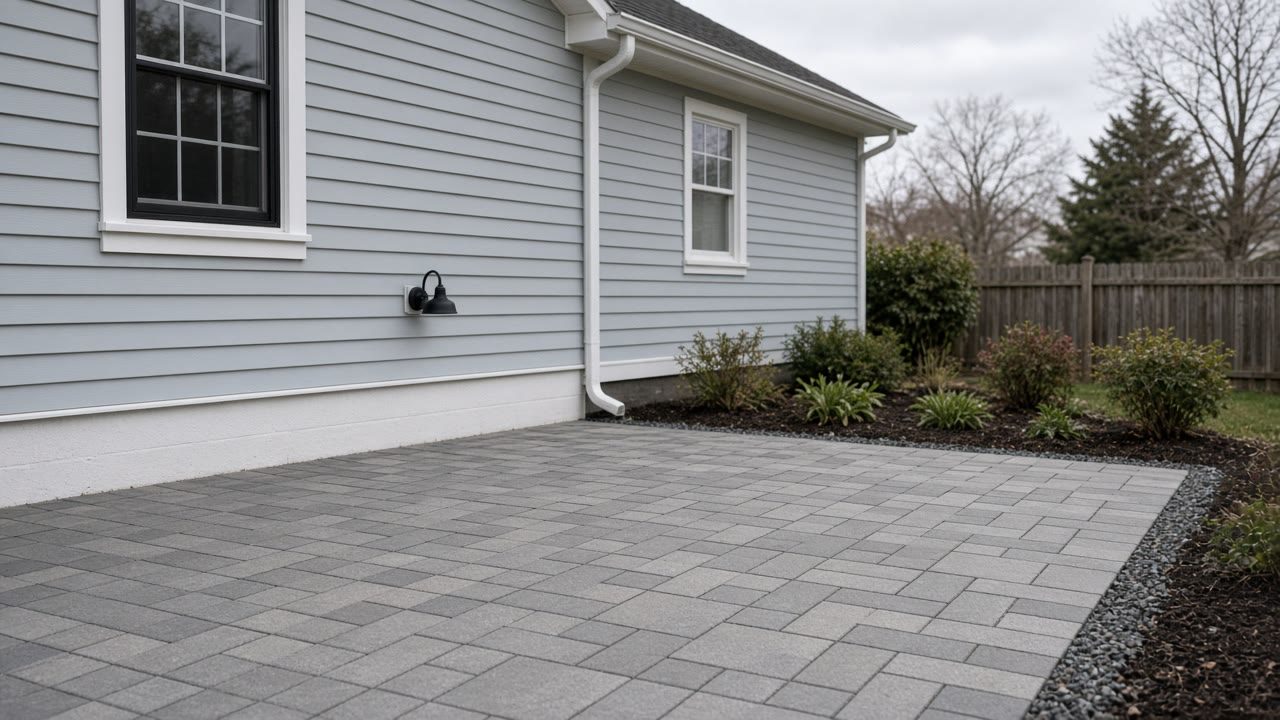
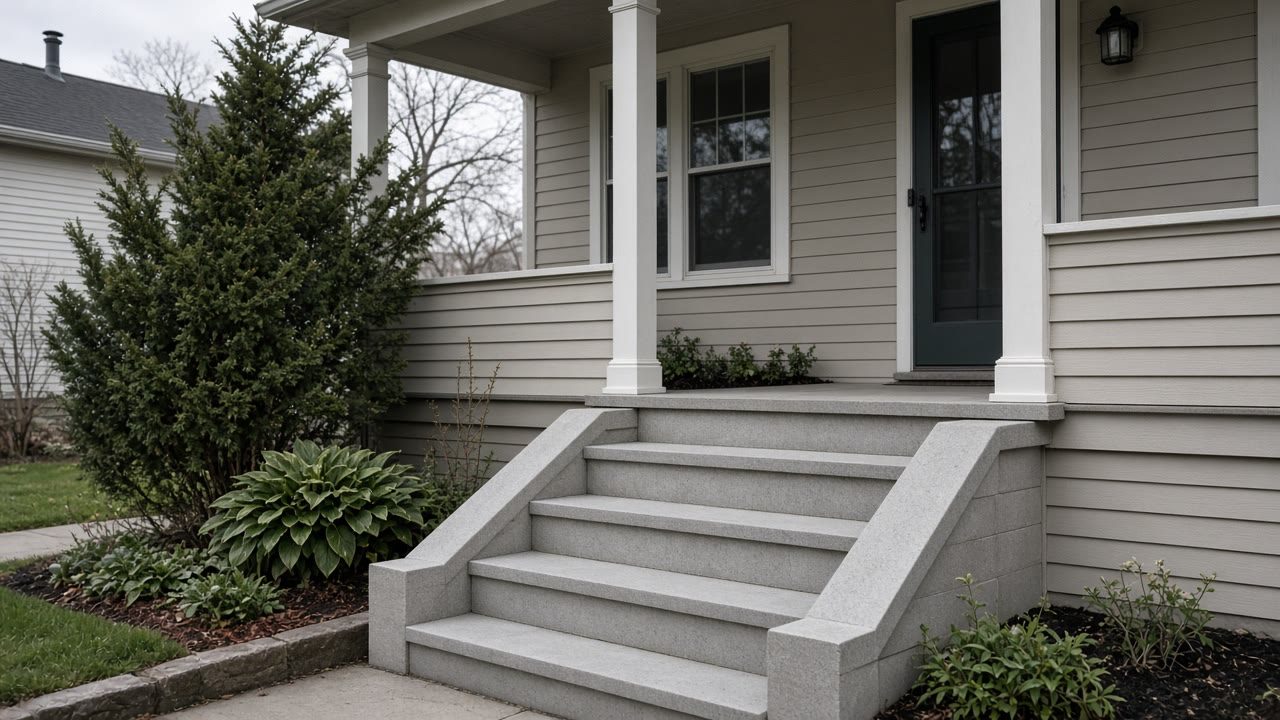
Have a patio, walkway, driveway or set of stone steps built in unit pavers or natural stone, with the base depth, the compaction and the drainage written into the quote as numbers you can check.
Start here if you want a patio, walk, driveway or steps in unit pavers or natural stone.
About Paver Patio Installation →Outdoor Fireplaces, Fire Pits and Kitchens
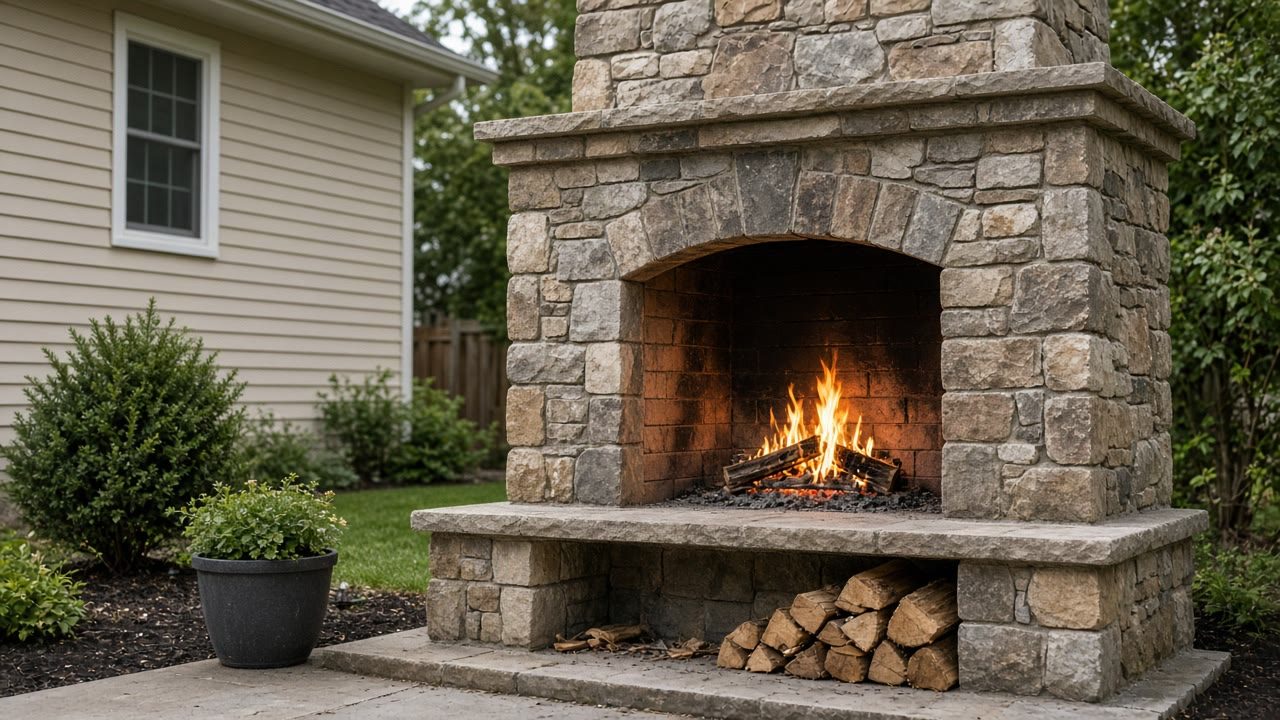
Build a masonry fire feature, outdoor kitchen, seat wall or pillar in the yard, sized to the state's rules on open fires and sitting on a footing your own code office has agreed to.
Start here if you want a fire feature, a pizza oven, an outdoor kitchen or stone pillars in the yard.
About Outdoor Living Masonry →Masonry Cleaning, Efflorescence and Sealing
Find out what the white bloom, the staining or the clouded surface on your masonry is reporting, and whether cleaning or sealing is worth paying for at all.
Start here if there is white bloom, staining or a clouded sealer on masonry that is otherwise doing its job.
About Masonry Cleaning and Sealing →Not sure which one you need?
Describe what you are seeing and we will tell you what the job actually needs.
How a masonry build gets planned here
Three steps, and two of them happen before anybody puts a price on the job.
Tell us what you want built, and the month you had in mind
The month matters as much as the material here. The month decides which specification the job is built to, and the window here that needs no special measures runs about 149 days, from early May to early October. An October start is a different job from a July one and should be priced like one.
Someone reads the ground and the wall, not the photographs
What a real quote is built on is what the excavation finds and what goes in behind the stone. On the dominant soil across the northern towns the seasonal high water table sits about 12 inches down from December through May, which is inside the depth of a patio excavation, and that changes the base before a single paver is laid.
A written scope, a base depth in inches, and dates
New York treats this work as a home improvement contract, so the estimated start and substantial completion dates belong in writing along with a payment schedule in dollars and cents. Ask for the base depth after compaction in the same document, because that is the number two quotes actually differ on.
What makes this a local problem
Because the masonry threshold is 40 degrees Fahrenheit rather than freezing, the relevant window at Syracuse is shorter than the freeze-free season. The same normals give a median last spring date of May 8 and a median first fall date of October 5 for a minimum temperature at or below 36 degrees Fahrenheit, a season of 149 days between them. The 36 degree measure is the closest published threshold to the specification's 40 degree line, so the genuinely unprotected masonry season here is on the order of five months, not the seven a frost-free reading would suggest.
Source: NOAA National Centers for Environmental Information, 1991-2020 US Climate Normals, annual and seasonal normals, station USW00014771 Syracuse Hancock International Airport, accessed 2026-09-14
The hardscape industry's own base specification is short and checkable. It states that the thickness of the base is determined by traffic, soil type, subgrade soil drainage and moisture, and climate; that sidewalks, patios and pedestrian areas should have a minimum base thickness after compaction of 4 inches over well-drained soils; that residential driveways on well-drained soils should be at least 6 inches thick; and that in colder climates, continually wet or weak soils will require that bases be thicker.
Source: Concrete Masonry and Hardscapes Association, PAV-TEC-002, Construction of Interlocking Concrete Pavements, accessed 2026-09-14
Section R703.12.2 of the Residential Code of New York State, Flashing at Foundation, requires that for adhered masonry veneer on exterior stud walls a corrosion-resistant screed or flashing of a minimum 0.019 inch, or 26 gage, galvanized or plastic, with a minimum vertical attachment flange of 3 1/2 inches, shall be installed to extend a minimum of 1 inch below the foundation plate line.
Source: 2020 Residential Code of New York State, Section R703, Exterior Covering, via UpCodes, accessed 2026-09-14
The calendar is a required contract term in New York, not a courtesy. General Business Law section 771(1)(b) requires every home improvement contract to contain the approximate or estimated dates when the work will begin and be substantially completed, including a statement of any contingencies that would materially change the approximate or estimated completion date, and requires the contract to specify whether or not the contractor and the owner have determined a definite completion date to be of the essence.
Source: New York General Business Law section 771, Contract provisions, Article 36-A Home Improvement Contracts, via the New York State Senate, accessed 2026-09-14
Why three prices for the same patio come back thousands apart
The quotes differ on the half you cannot see. Everyone is pricing the same stone, the same pattern and roughly the same square footage, so the money is in the excavation, the base, the compaction and the drainage, and none of that survives into a photograph of finished work.
There is a number to ask for. The hardscape industry's own specification sets a minimum compacted base of 4 inches under a patio or walkway and 6 inches under a residential driveway, and only over well drained soils: colder climates and continually wet or weak ground need more again. Get that depth written into the quote in inches after compaction and two prices become comparable for the first time.
On a wall the equivalent question is where water leaves. Section R703.12.2 of the Residential Code of New York State wants a corrosion resistant screed at the foundation line, 26 gauge minimum with a 3 1/2 inch attachment flange, and the barrier lapped over the outside of that flange so water is carried out rather than in. Ask which of your quotes says so. Once the stone is on, nobody sees it again.
What we do differently on a job that has not been built yet
The calendar is treated as part of the specification
Masonry can be laid in the cold, and the specification says exactly how: the sand or the mixing water heated so the mortar leaves the mixer between 40 and 120 degrees Fahrenheit, and the finished work covered and held warm for 24 hours, or 48 where it has been grouted. The question we put to your contractor is whether that program is in the price, because it is the line item a cheap autumn bid is missing.
The base depth goes into the quote as a number
Not a deep base, not properly compacted. Inches after compaction, the compaction target, and a line saying where water leaves. The hardscape specification asks for subgrade compaction of at least 98 percent standard Proctor density, and it says outright that on saturated or very fine soils the number may not be reachable without stabilizing the ground first.
We say so when spring is the better slot
October is where the season turns here: 12.8 nights below 40 degrees Fahrenheit and the wettest month of the Syracuse year. If your project is big enough to run into that, we would rather book you a spring date than watch a build get rushed under blankets in the rain.
You leave with two questions for every other quote
What cold weather protection is priced in if the job runs past early October, and how deep is the base and where does water leave the assembly. Anyone who has built this properly answers both in a sentence, and asking costs you nothing.
Coverage across Syracuse and the surrounding Onondaga County area
What people ask before they build
I have three quotes thousands apart. How do I tell which one is real?
Compare the parts you cannot see. Everybody is quoting the same stone, so the difference is usually the excavation, the base depth, the compaction, the drainage and the month the work lands in. Ask each contractor for the compacted base depth in inches, for where water leaves the assembly, and for what cold weather protection is in the price if the job runs past early October. The hardscape specification's own minimum for a patio is 4 inches of compacted base, and only over well drained soil. A quote that answers all three has been thought about. A quote that cannot answer any of them is cheap for a reason you will meet in about four springs.
A contractor says my patio has to go down 42 inches. Is that right?
Not for a patio. A dry laid paver patio at grade carries no footing at all, which is exactly why unit paving flexes where a slab would crack, and the industry specification states plainly that a small amount of settling is typical of all flexible paving. Footings below the frost line are for structures: an outdoor fireplace, a tall pillar, a chimney. New York does not even publish a statewide frost depth, because the code leaves that column blank for each jurisdiction to fill in, so the only authoritative number is the one your own town's code office gives you on the phone. If someone is quoting a 42 inch footing under a patio, they are describing a footing for something that is not a patio, and you do not need us to tell them so.
Do I have to seal a new patio or a new stone wall?
No. Sealing is an appearance decision and a recurring one. Sealers darken the surface and bring up the color, they need redoing as they wear, and nothing structural depends on them. There are two ways it goes wrong here. Applied over joints or a base that are still wet, or over a base that drains poorly, a sealer can cloud, and it then has to be removed or redissolved at your expense. And on brickwork that is still carrying salts to the surface, a coating can stop them at its own inner margin, an eighth to a quarter of an inch below the face, where they crystallize and take pieces off the brick. If what actually annoys you is sand washing out of the joints, the right product is a joint sand stabilizer rather than a surface sealer.
There is white bloom on masonry we had built last year. Do we need somebody out?
Probably not yet. Efflorescence on brickwork less than a year old has its own name, new building bloom, appears fairly uniformly across the wall, and comes from water left in the materials by construction. It typically weathers off on its own. Efflorescence needs three conditions at once: soluble salts, water in contact with them long enough to dissolve them, and a pore structure that carries the solution to a surface where it can evaporate. Washing removes the mark and none of the three. So if the bloom is in its first year, wait. If it keeps returning after that, the thing worth paying somebody to look at is where the water is getting in, not the stain.
Is it too late in the year to start?
That depends on the job and on what the quote covers, and the answer is not automatically no. Below 40 degrees Fahrenheit the specification changes rather than stopping: the sand or the mixing water is heated so the mortar leaves the mixer between 40 and 120 degrees Fahrenheit, and the new work is covered and held warm for 24 hours, or 48 hours where it has been grouted. That protection costs money and takes time. So the question is not whether your contractor works in November, it is whether November has been priced and detailed as November. At Syracuse the window needing none of it runs about 149 days, and October is the turn, with 12.8 nights below 40 degrees and more rain than any other month.
What am I entitled to have in writing before anyone starts?
More than most people ask for. New York's General Business Law names patios, terraces, driveways, landscaping, fences and porches as home improvement, so this work sits inside Article 36-A. The contract has to carry the approximate start and substantial completion dates and any contingency that would materially change the completion date, which is the clause that makes the build season conversation enforceable. Progress payments have to be set out in dollars and cents against named stages of the work. Money paid before completion is required to be held under the Lien Law unless the contractor posts a bond, a contract of indemnity or an irrevocable letter of credit instead. And you can cancel until midnight of the third business day after you sign, which is long enough to get a second quote read properly.
Tell us what you are seeing
Tell us what you have and we will tell you where you stand.