
Onondaga County
New Masonry in Clay: the Fire Feature Sets the Paperwork
If your Clay project has a fire feature in it, the permit application is part of the job and it is better known before you pick a start date than after. The Town of Clay names fireplaces, stoves and inserts on the work that requires a building permit, and names no patio at grade anywhere on the list.
Request a quote in Clay
Share a few details so we can confirm coverage and arrange the right next step.
Would you rather talk it through? Call (315) 640-3590, answered 24/7.
$100 off your first job
Credited by us on your first booked job.
- One credit per customer per property, on your first booked job.
- Valid through December 31, 2026.
Mention this offer when you book. Full terms.
What the Town of Clay puts on its permit list, and what it leaves off
The Town of Clay Department of Planning and Development lists new buildings, additions and alterations, garages and barns, pools, sheds, decks and porches, fences, signs, fireplaces, stoves and inserts, and demolition. So an outdoor living build that includes a masonry fireplace needs an application even though the paving around it may not, and the two halves of one project can move at different speeds. A fire pit is a different question again: the state allows an outdoor fire under 3 feet high and under 4 feet across burning only charcoal or dry untreated wood, and a town or village is free to be stricter, so size the masonry to the rule rather than meeting the rule afterwards. Underneath all of it, Clay is lake plain silt. Collamer silt loam covers about 19.7 percent of the town and Niagara silt loam about 17.1 percent, both hydrologic group C over D, which means slow infiltration on a yard that looks firm in July.
Areas within Clay: Radisson
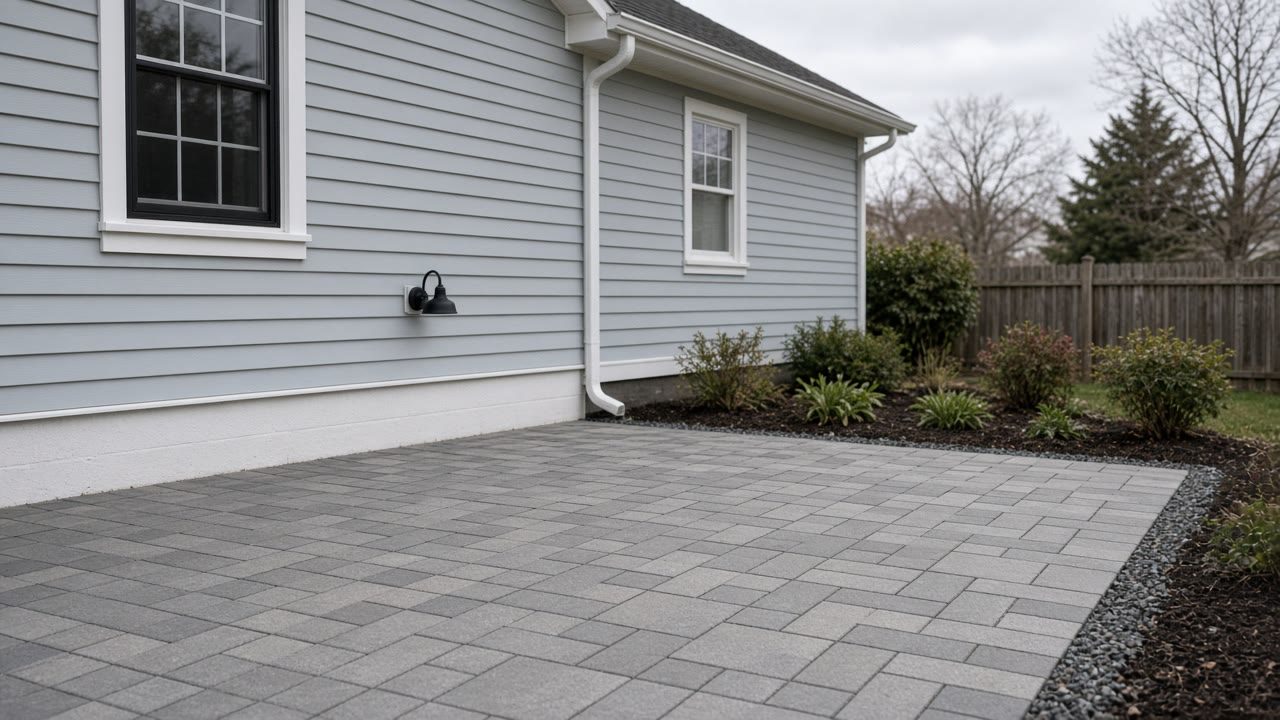
Fire feature first, or paving first?
Tell us what you want in the yard and we will sequence the application and the build around the season rather than against it.
Installation work we cover in Clay and Radisson
Stone and Brick Veneer Installation
Put stone or brick veneer on a wall, chimney chase, column or foundation face, with the barrier, flashing and weep screed behind it built as a drainage path rather than as a finish.
Stone Veneer in Clay →Paver Patios, Walkways and Stone Steps
Have a patio, walkway, driveway or set of stone steps built in unit pavers or natural stone, with the base depth, the compaction and the drainage written into the quote as numbers you can check.
Paver Patio Installation in Clay →Outdoor Fireplaces, Fire Pits and Kitchens
Build a masonry fire feature, outdoor kitchen, seat wall or pillar in the yard, sized to the state's rules on open fires and sitting on a footing your own code office has agreed to.
Outdoor Living Masonry in Clay →Masonry Cleaning, Efflorescence and Sealing
Find out what the white bloom, the staining or the clouded surface on your masonry is reporting, and whether cleaning or sealing is worth paying for at all.
Masonry Cleaning and Sealing in Clay →Clay's permit list, its soils and its build era
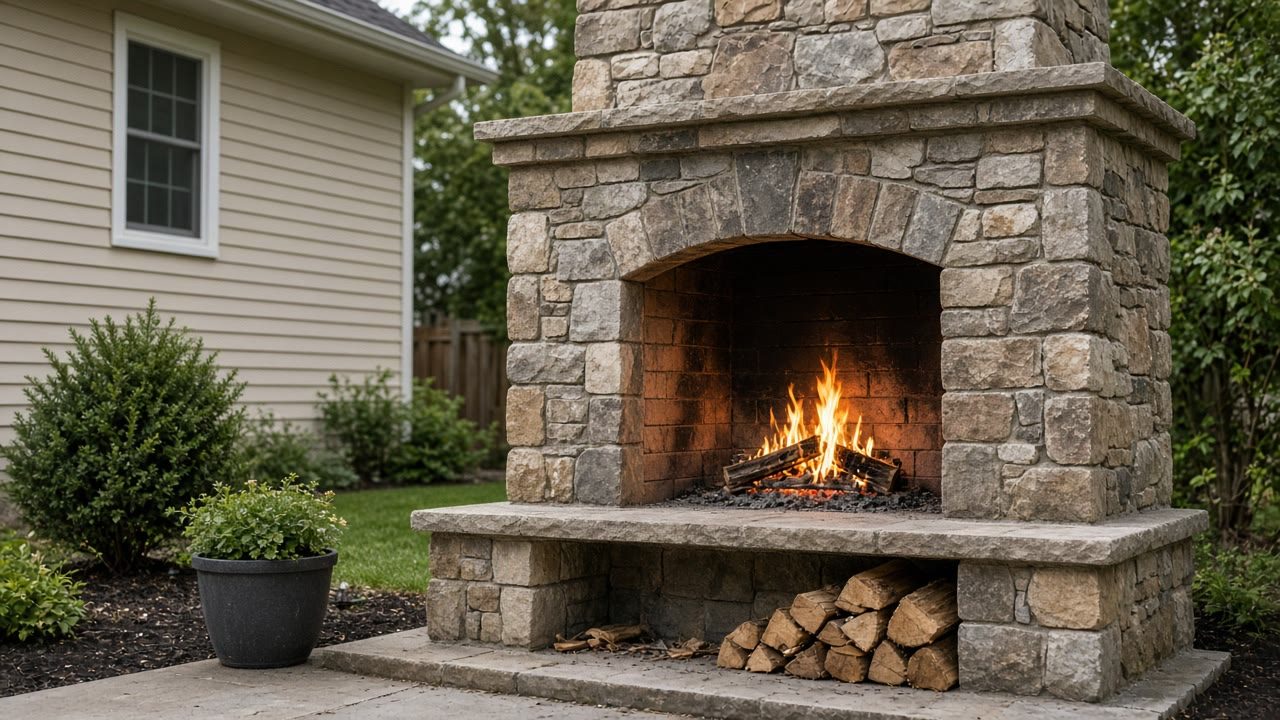
Both of the fast-growing northern towns name fireplaces on their list of work requiring a building permit and neither names a patio. The Town of Clay lists new buildings, all additions and alterations, mobile homes, garages and barns, pools, sheds and storage buildings, decks and porches, fences, signs, fireplaces, stoves and inserts, and demolition. The Town of Cicero lists decks, porches and garages, fireplaces, pellet stoves and wood stoves, storage sheds no matter the size, fences, swimming pools, and structural, plumbing or electrical alterations, and requires a permit before excavation or filling of more than 10 cubic yards. Cicero also requires a Floodplain Development Permit for any work in a 100 year flood zone, including work that would not otherwise need a permit.
Source: Town of Clay, New York, Department of Planning and Development, Building Permits Information, and Town of Cicero, New York, Department of Zoning and Planning, forms and permits, accessed 2026-09-14
New York caps the size of a legal outdoor fire. The Department of Environmental Conservation states that campfires, small cooking fires, or any other outdoor fire less than 3 feet in height and 4 feet in length, width or diameter are allowed, that all fires must consist of only charcoal or dry, clean, untreated and unpainted wood, that the burning of brush is prohibited from March 16 through May 14, and that towns, villages, cities and counties can pass ordinances that are stricter than Part 215. The underlying regulation, 6 NYCRR 215.3(c), permits small fires used for cooking and camp fires provided that only charcoal or untreated wood is used as fuel and the fire is not left unattended until extinguished.
Source: New York State Department of Environmental Conservation, Open Burning, and 6 NYCRR section 215.3, Exceptions and restricted burning, via the Cornell Legal Information Institute, accessed 2026-09-14
In the Town of Clay, 44.4 percent of the mapped soil area is classed poorly drained, somewhat poorly drained or very poorly drained, and 9.6 percent is classed well drained. The largest map units are Collamer silt loam on 2 to 6 percent slopes at about 19.7 percent of the town, Niagara silt loam on 0 to 4 percent slopes at about 17.1 percent, and Rhinebeck silt loam at about 8.6 percent, with Carlisle muck at about 4.1 percent.
Source: United States Department of Agriculture, Natural Resources Conservation Service, Soil Survey Geographic Database for Onondaga County New York, survey area NY067, queried through the Soil Data Access service, accessed 2026-09-14
Ranked by the share of housing units built in 2000 or later, the era in which adhered stone veneer and segmental paver hardscape became the dominant new masonry products, the places of this metro spread very widely. Radisson, the census place inside the Town of Clay, leads at 32.4 percent, followed by the Town of Lysander at 25.8 percent, the Town of Van Buren at 21.9 percent, Baldwinsville village at 20.1 percent, the Town of Cicero at 19.1 percent, the Town of Clay at 15.4 percent, the Town of Camillus at 15.2 percent, the Town of Manlius at 11.6 percent, the Town of Marcellus at 11.3 percent, the Town of Skaneateles at 11.2 percent, Marcellus village at 9.9 percent, the Town of DeWitt at 8.7 percent, Skaneateles village at 8.4 percent, Fayetteville village at 8.1 percent, the Town of Salina at 7.0 percent, the City of Syracuse at 6.4 percent, Camillus village at 6.4 percent, Liverpool village at 6.1 percent, North Syracuse village at 4.7 percent, Manlius village at 4.5 percent, and both East Syracuse village and Solvay village at 0.0 percent. The county figure is 11.6 percent.
Source: US Census Bureau, American Community Survey 2020-2024 5-year estimates, table B25034 Year Structure Built and table B25035 Median Year Structure Built, accessed 2026-09-14
Send the project and we will tell you what Clay wants on paper
An address, a ZIP code and a sentence about the yard is enough to start.