
Onondaga County
Masonry and Paver Installation in Cicero: Start With the Water
Get the base depth and the drainage path written into your quote as numbers, and you have already settled the thing that decides whether Cicero paving is still flat in ten years. The Town of Cicero has the wettest mapped soils in this metro: 59.5 percent of it is classed poorly, somewhat poorly or very poorly drained, including 12.0 percent Carlisle muck.
Request a quote in Cicero
Share a few details so we can confirm coverage and arrange the right next step.
Would you rather talk it through? Call (315) 640-3590, answered 24/7.
$100 off your first job
Credited by us on your first booked job.
- One credit per customer per property, on your first booked job.
- Valid through December 31, 2026.
Mention this offer when you book. Full terms.
What the soil survey says about Cicero ground
In the Town of Cicero, 59.5 percent of the mapped soil area is classed poorly drained, somewhat poorly drained or very poorly drained, and 6.2 percent is classed well drained. The single largest map unit is Niagara silt loam on 0 to 4 percent slopes at about 28.6 percent of the town, followed by Collamer silt loam at about 12.2 percent and Carlisle muck, a very poorly drained organic soil, at about 12.0 percent.
Source: United States Department of Agriculture, Natural Resources Conservation Service, Soil Survey Geographic Database for Onondaga County New York, survey area NY067, queried through the Soil Data Access service, accessed 2026-09-14
Niagara silt loam, the second most extensive soil in Onondaga County and the dominant soil across the northern towns, carries a seasonal high water table with its top at about 31 centimeters, roughly 12 inches, below the surface, and the county soil data records that condition for December, January, February, March, April and May. Rhinebeck silt loam has the same 31 centimeter figure. Kendaia silt loam is shallower at about 20 centimeters, roughly 8 inches. For comparison, Collamer silt loam is about 54 centimeters, roughly 21 inches, and Honeoye silt loam about 76 centimeters, roughly 30 inches.
Source: United States Department of Agriculture, Natural Resources Conservation Service, Soil Survey Geographic Database for Onondaga County New York, survey area NY067, queried through the Soil Data Access service, accessed 2026-09-14
The specification treats subsurface drainage as a design item rather than an extra. It states that free-standing water saturating the soil should be removed, that low wet areas can be stabilized with a layer of crushed stone or cement, and that a typical assembly is a 4 inch diameter perforated drainage pipe surrounded by a minimum 3 inch of No. 57 or similar open-graded stone, wrapped in geotextile, set with the top of the stone even with the compacted subgrade and run along the pavement perimeter to remove excess water from the subgrade and base, sloped and directed to outlets. It states that drain pipes are recommended in clay soils or other slow draining soils, and that subgrade drainage extends pavement performance to the extent that the small additional investment is returned many times in additional pavement service years.
Source: Concrete Masonry and Hardscapes Association, PAV-TEC-002, Construction of Interlocking Concrete Pavements, accessed 2026-09-14
National Flood Insurance Program figures in the county hazard mitigation plan annexes show how differently water behaves across the northern towns. The Town of Cicero has 180 active policies and 153 claims paid totalling about 1.44 million dollars. The Town of Clay has 93 policies and 49 claims paid totalling 455,606 dollars, and no repetitive loss or severe repetitive loss properties. North Syracuse village has 4 policies and has had no claims paid at all, a total of zero dollars. Solvay village has 3 policies and 6 claims paid totalling 10,957 dollars, and East Syracuse village has 9 policies and 12 claims paid totalling 223,722 dollars.
Source: Onondaga County, New York, 2025 Hazard Mitigation Plan, Town of Cicero Annex, Town of Clay Annex and Village of North Syracuse Annex, Onondaga County Department of Planning, accessed 2026-09-14
Both of the fast-growing northern towns name fireplaces on their list of work requiring a building permit and neither names a patio. The Town of Clay lists new buildings, all additions and alterations, mobile homes, garages and barns, pools, sheds and storage buildings, decks and porches, fences, signs, fireplaces, stoves and inserts, and demolition. The Town of Cicero lists decks, porches and garages, fireplaces, pellet stoves and wood stoves, storage sheds no matter the size, fences, swimming pools, and structural, plumbing or electrical alterations, and requires a permit before excavation or filling of more than 10 cubic yards. Cicero also requires a Floodplain Development Permit for any work in a 100 year flood zone, including work that would not otherwise need a permit.
Source: Town of Clay, New York, Department of Planning and Development, Building Permits Information, and Town of Cicero, New York, Department of Zoning and Planning, forms and permits, accessed 2026-09-14
Get the base depth quoted as a number
Tell us where in Cicero you are and what you want built, and we will line up contractors who will put the base and the drainage in writing.
Two Cicero permit triggers, and a water table 12 inches down
Permits in Cicero go to the town Department of Zoning and Planning, and two of its triggers catch this work. Fireplaces, pellet stoves and wood stoves are named on the list that needs a building permit and a patio at grade is not, and a separate permit is required before excavation or filling of more than 10 cubic yards. Ten cubic yards is roughly a 20 by 20 foot area taken down 8 inches, so an ordinary patio dig reaches it. Work inside a 100 year flood zone needs a Floodplain Development Permit even where nothing else would. Then there is the ground. Niagara silt loam covers about 28.6 percent of the town and carries a seasonal high water table about 12 inches down from December through May, which puts standing water inside the depth of a patio excavation for half the year, and the industry answer on soil like that is a perforated perimeter drain in open-graded stone rather than a deeper pile of the same fill.
New masonry we arrange across the Town of Cicero
Stone and Brick Veneer Installation
Put stone or brick veneer on a wall, chimney chase, column or foundation face, with the barrier, flashing and weep screed behind it built as a drainage path rather than as a finish.
Stone Veneer in Cicero →Paver Patios, Walkways and Stone Steps
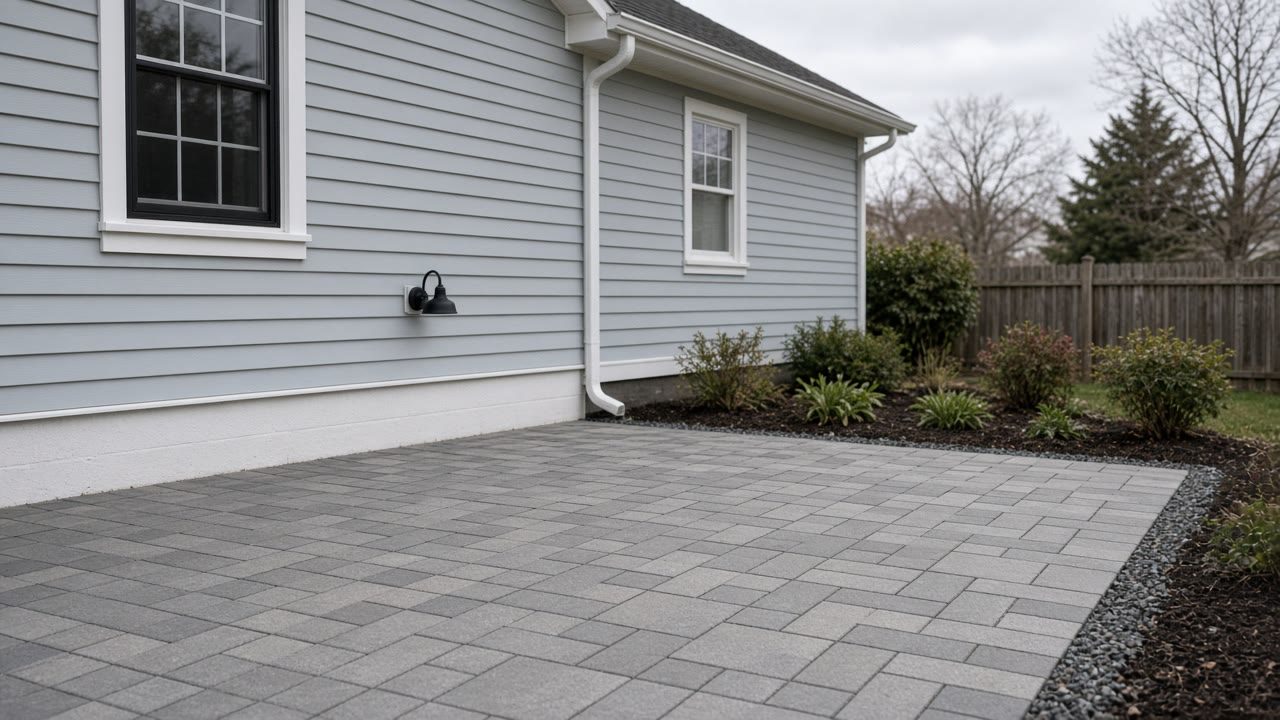
Have a patio, walkway, driveway or set of stone steps built in unit pavers or natural stone, with the base depth, the compaction and the drainage written into the quote as numbers you can check.
Paver Patio Installation in Cicero →Outdoor Fireplaces, Fire Pits and Kitchens
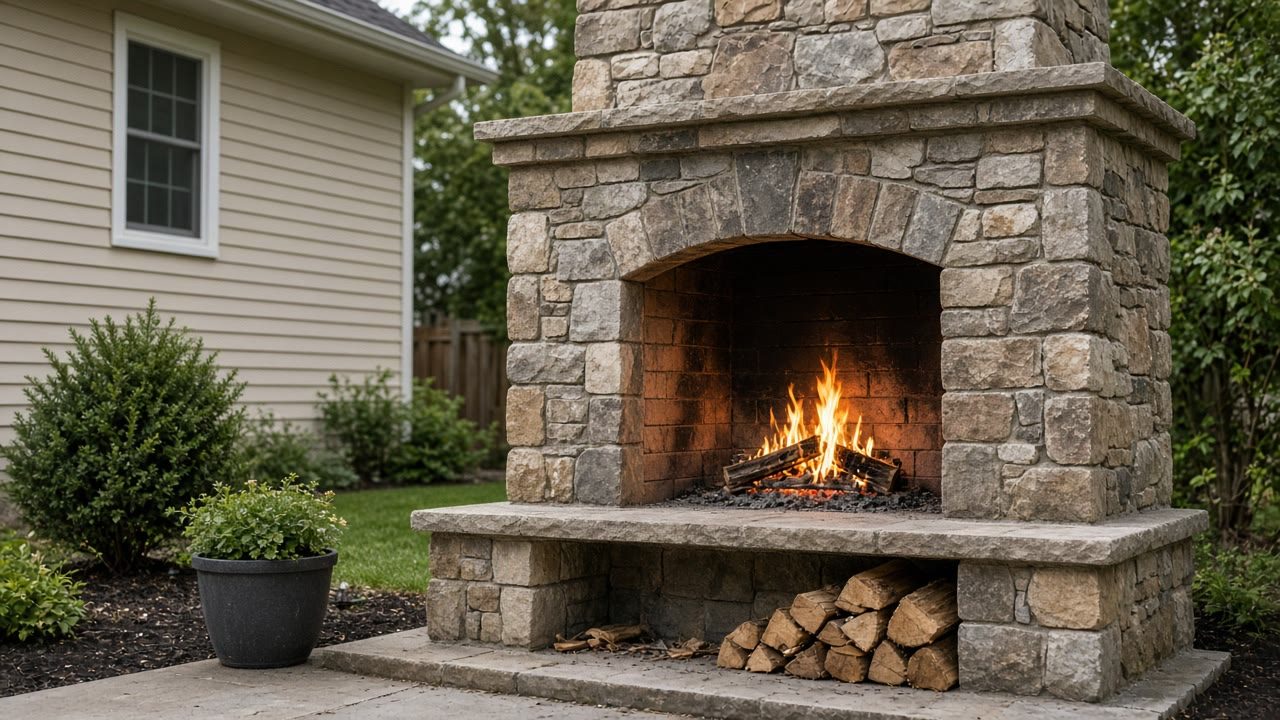
Build a masonry fire feature, outdoor kitchen, seat wall or pillar in the yard, sized to the state's rules on open fires and sitting on a footing your own code office has agreed to.
Outdoor Living Masonry in Cicero →Masonry Cleaning, Efflorescence and Sealing
Find out what the white bloom, the staining or the clouded surface on your masonry is reporting, and whether cleaning or sealing is worth paying for at all.
Masonry Cleaning and Sealing in Cicero →Still weighing a patio against a full outdoor room?
Send the project and your ZIP code. We will tell you what the ground in your part of Cicero is likely to add to it.