
New Masonry We Arrange Across Onondaga County
Pick the one you are actually asking for and its page tells you what decides the price. Two of these are assemblies with a water path written into the code, one is a footing question settled by your own town, and one is surface work on masonry that is otherwise doing its job. They read differently because they fail differently: a veneer wall and a paver patio have almost nothing in common below the surface, and in both cases the quote is mostly about the part that gets covered up.
What we arrange
Stone and Brick Veneer Installation
Veneer installation puts a stone or brick face on a wall that carries no load from it. On a frame wall the product is adhered: a water-resistive barrier goes on first, then a corrosion-resistant screed or flashing at the foundation line, then lath, a mortar scratch coat, then the stone. The Residential Code of New York State does not assume the stone keeps water out. Section R703.1.1 requires the wall envelope to carry a barrier behind the cladding and a means of draining to the exterior any water that penetrates the cladding, which makes a veneer wall a water-management assembly with a stone rainscreen in front of it. Full-bed natural stone and brick veneer behave differently, carrying their own weight on a ledge or a footing, and what the existing wall can take decides which of the two is on the table.
Read more →Paver Patios, Walkways and Stone Steps
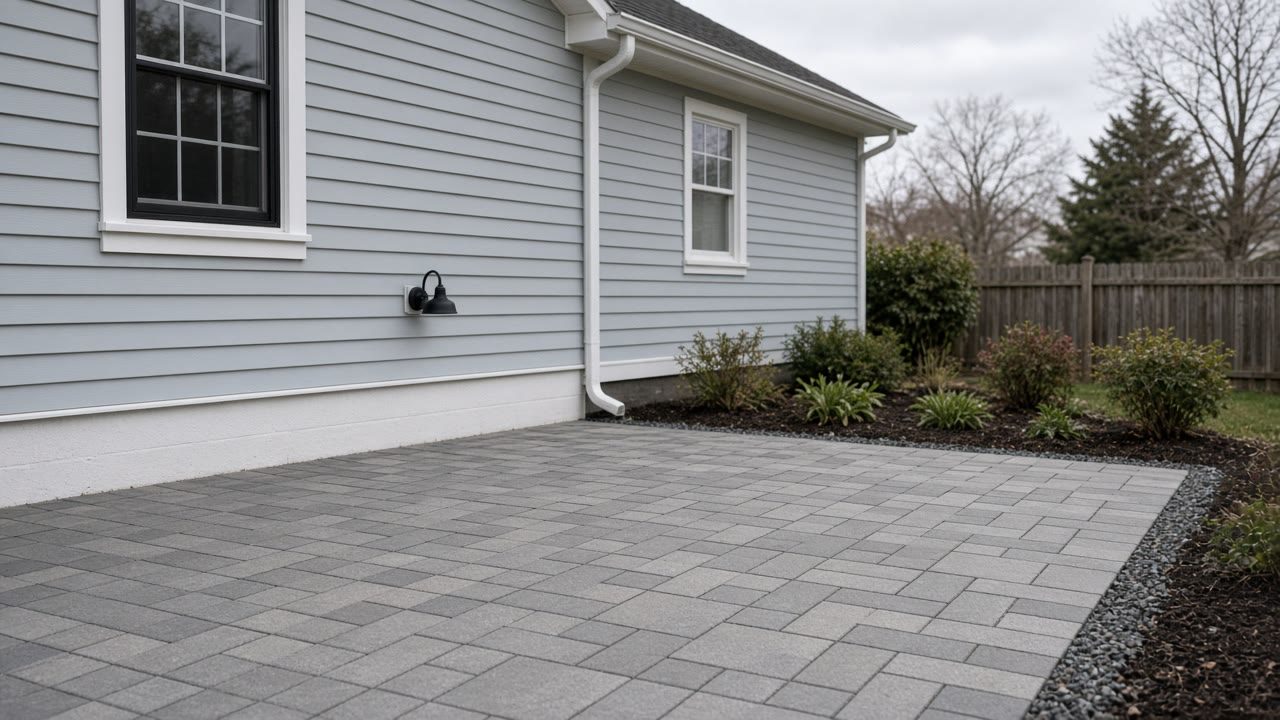
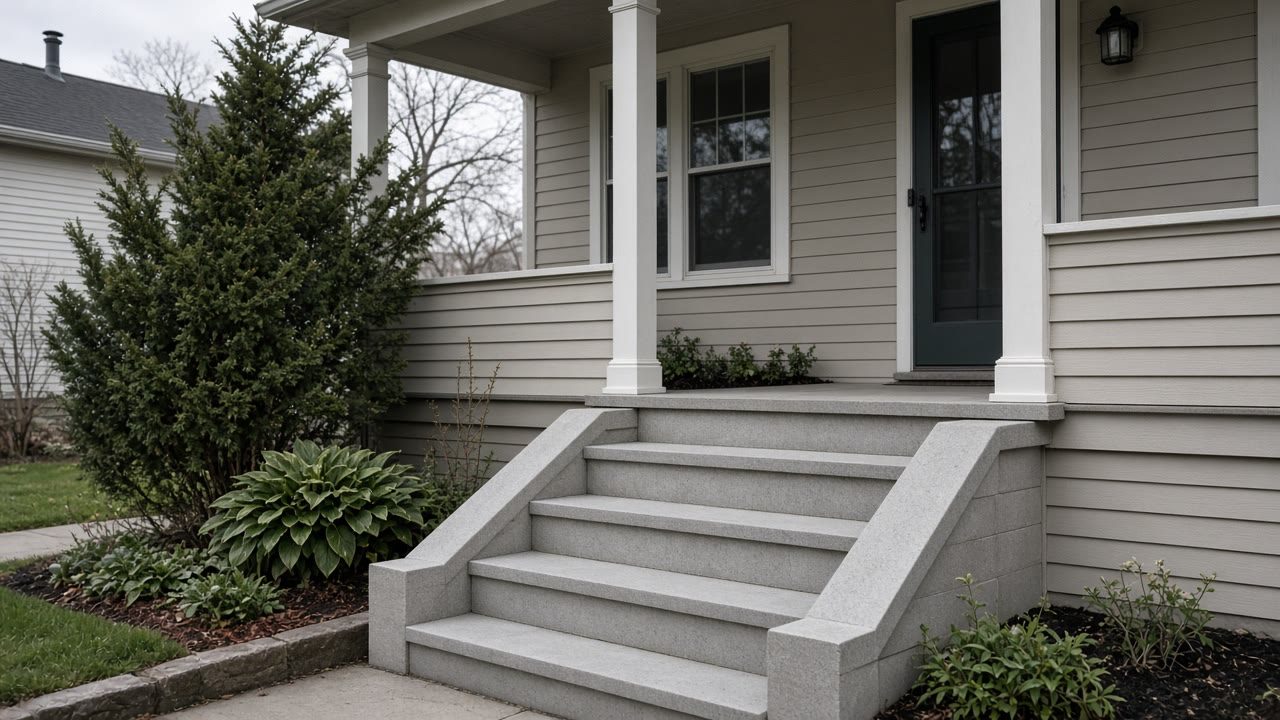
Unit paving is built from the subgrade upward. The ground is excavated, the exposed subgrade is compacted, an open-graded base goes in and is compacted in lifts, a thin bedding layer is screeded over it, and the pavers or stone are set, edge-restrained and jointed. The base is most of the work and none of the photograph. The hardscape industry's own specification sets base thickness by traffic, soil type, subgrade drainage and moisture, and climate: a minimum of 4 inches after compaction for patios, walkways and pedestrian areas over well-drained soils, at least 6 inches for a residential driveway, and thicker again in colder climates over continually wet or weak soils. It treats subsurface drainage as a design item rather than an extra. Unit paving is also a flexible surface by design, which is the real difference from one rigid piece of concrete: it moves at the joints instead of cracking across the middle, and it can be lifted and reset.
Read more →Outdoor Fireplaces, Fire Pits and Kitchens
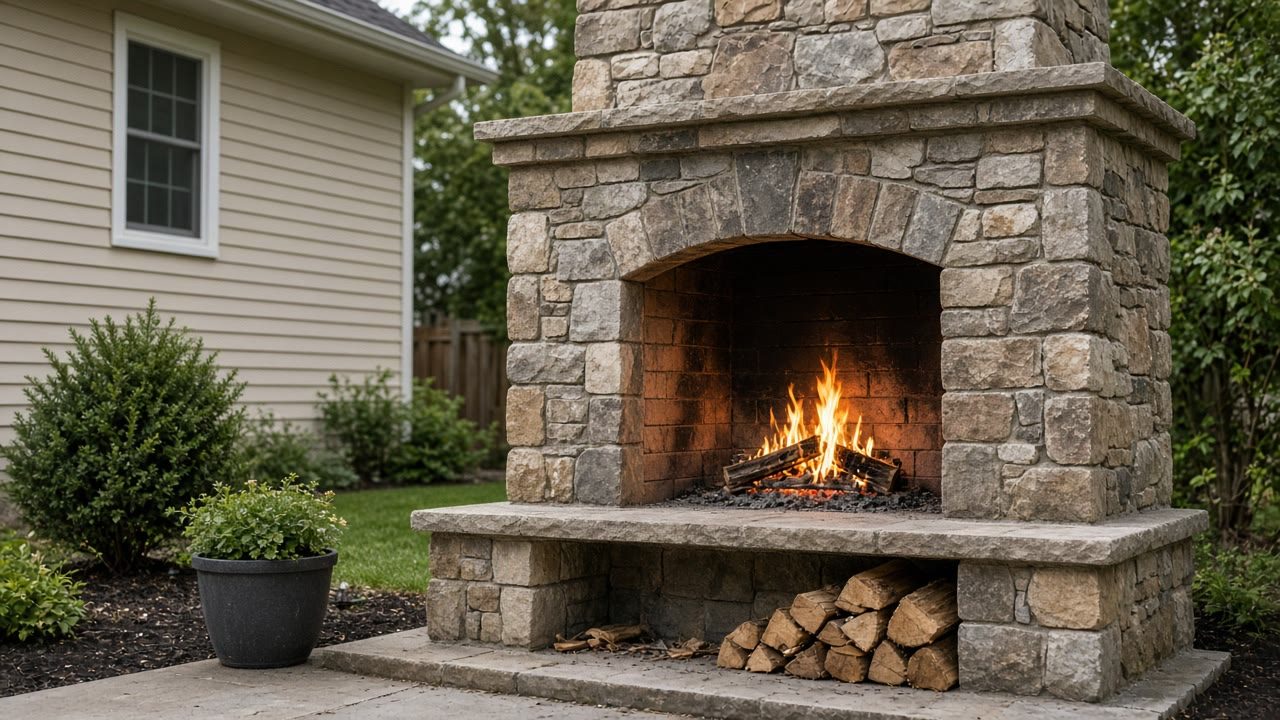
An outdoor fireplace, fire pit, pizza oven, kitchen counter run, seat wall or entry pillar is a small masonry structure with real weight, and most of them sit on a footing. Section R403.1.4 of the Residential Code of New York State puts the floor for any exterior footing at 12 inches below undisturbed ground, and frost protection is a further question answered one of four ways: extended below the frost line in the code's own climate table, built under Section R403.3, designed to ASCE 32, or founded on solid rock. Two of those four do not help an unheated outdoor structure, and the climate table's frost line column is published blank, to be filled in by each jurisdiction. Separately from the footing, the fire itself is regulated: the state caps the size of a lawful open outdoor fire, restricts what may be burned in it, and allows your own town or village to be stricter than the state.
Read more →Masonry Cleaning, Efflorescence and Sealing
Cleaning and sealing is surface work on masonry that is otherwise doing its job. The usual reason for the call is efflorescence, the white bloom that appears on brick, stone and paving, and the Brick Industry Association sets out the three conditions it needs all at once: soluble salts present within or in contact with the masonry, a source of water in contact with those salts long enough to dissolve them, and a pore structure that lets the solution travel to a surface where the water can evaporate. Washing removes the mark and changes none of the three, so the first task on any bloom is working out which condition can be removed, and in practice that is nearly always the water. The same technical note adds that the assumption the brick caused it is usually wrong, because the soluble compounds most often come from the materials in contact with the brick: mortar, grout, concrete masonry, concrete or soil. Sealing is a separate decision and a separate product from a joint sand stabilizer.
Read more →The equipment these jobs actually arrive with
Not sure which one you need?
Describe the problem and we will point you to the right work.
Request a Quote
Share a few details so we can confirm coverage and arrange the right next step.
Would you rather talk it through? Call (315) 640-3590, answered 24/7.
$100 off your first job
Credited by us on your first booked job.
- One credit per customer per property, on your first booked job.
- Valid through December 31, 2026.
Mention this offer when you book. Full terms.
Tell us what you are seeing
Tell us what you are dealing with and we will take it from there.