
Syracuse and the surrounding Onondaga County area
Outdoor Fireplaces, Fire Pits and Kitchens in Syracuse
Build a masonry fire feature, outdoor kitchen, seat wall or pillar in the yard, sized to the state's rules on open fires and sitting on a footing your own code office has agreed to.
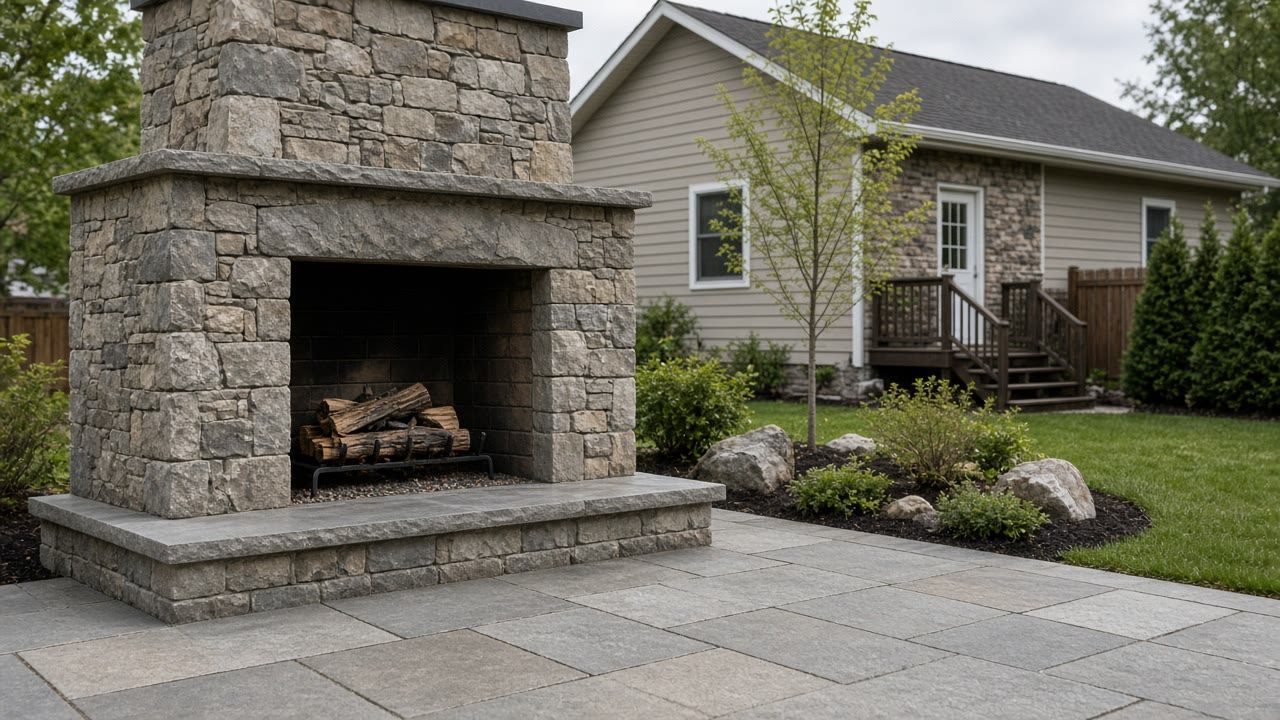
Outdoor Living Masonry quote
Tell us what you want to build and roughly where in the yard it goes. We pass it to licensed, insured masons, and we will tell you which two questions to put to your own code office first.
Would you rather talk it through? Call (315) 640-3590, answered 24/7.
$100 off your first job
Credited by us on your first booked job.
- One credit per customer per property, on your first booked job.
- Valid through December 31, 2026.
Mention this offer when you book. Full terms.
A fire feature is a small structure, not a yard ornament
An outdoor fireplace, fire pit, pizza oven, kitchen counter run, seat wall or entry pillar is a small masonry structure with real weight, and most of them sit on a footing. Section R403.1.4 of the Residential Code of New York State puts the floor for any exterior footing at 12 inches below undisturbed ground, and frost protection is a further question answered one of four ways: extended below the frost line in the code's own climate table, built under Section R403.3, designed to ASCE 32, or founded on solid rock. Two of those four do not help an unheated outdoor structure, and the climate table's frost line column is published blank, to be filled in by each jurisdiction. Separately from the footing, the fire itself is regulated: the state caps the size of a lawful open outdoor fire, restricts what may be burned in it, and allows your own town or village to be stricter than the state.
- Masonry outdoor fireplaces with firebox, throat and flue
- Fire pits, both open masonry rings and gas-fed bowls set in a masonry surround
- Outdoor kitchen counter runs: block or framed carcass, veneer face, stone or tile tops, and openings for a grill, a cooler and access doors
- Pizza ovens and grill islands
- Seat walls, pillars, entry columns and cap stones as parts of a build
- Footings, piers and grouted cores, with the concrete specified for exposed work in a severe weathering climate
- Sequencing around the gas, water and electrical rough-in that separate licensed trades install
- Hearth extensions, ember-safe surrounds and clearance to combustible structures
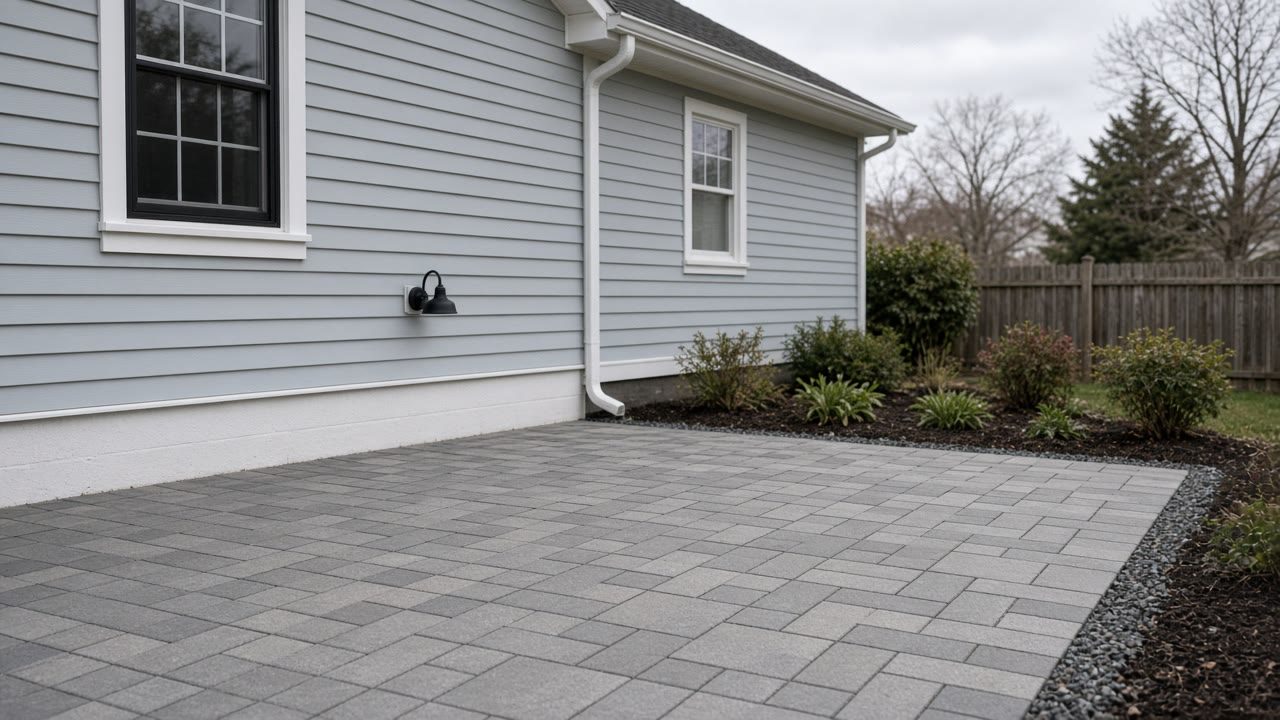
What sets the footing under your fire feature
The footing is most of the money you will never see again, and in New York its depth is not a national number, a state number or even a county number. These are the things that set it.
Which of the code's four frost routes your town accepts
Section R403.1.4.1 permits foundation walls, piers and other permanent supports to be protected from frost by extending below the frost line in Table R301.2(1), by Section R403.3, by ASCE 32 design, or by bearing on solid rock, and states that footings shall not bear on frozen soil unless the frozen condition is permanent. There is more than one lawful answer, so the useful question is which one your contractor is using and whether your building department accepts it.
That New York publishes no frost depth for you at all
Section R301.2 states that additional criteria shall be established by the local jurisdiction and set forth in Table R301.2(1), and the table's own footnote tells the jurisdiction to fill in the frost line depth column. The column is published blank. The Department of State's own technical bulletin confirms that the local jurisdiction provides the figure, and names air freezing index, soil type, water table depth, local historical data and field experience as its inputs. Soil and water table are on that list, which is why a figure that is right in Marcellus can be wrong in Cicero.
Whether the structure falls inside an exception
Section R403.1.4.1 exempts free-standing accessory structures of 400 square feet or less of other than light-frame construction with an eave height of 10 feet or less, and free-standing accessory structures of 600 square feet or less of light-frame construction. A masonry fire feature can land inside that second exemption, which is exactly why two honest masons can quote you 12 inches and 48 inches for the same thing.
Whether the shallow insulated route is even available
Section R403.3 applies only to buildings whose monthly mean temperature is maintained at not less than 64F, and states that foundations protected from frost by that method shall not be used for unheated spaces such as porches, utility rooms, garages and carports. For an outdoor fireplace or pillar that route is closed, leaving frost depth, an ASCE 32 design, solid rock, or the accessory structure exception.
The concrete in the footing and in anything exposed
The Department of State bulletin states that New York is entirely within the Severe weathering category, the worst of the three. Table R402.2 then requires 3,500 psi at 28 days for porches and steps exposed to the weather and 3,000 psi for exposed vertical concrete, with 5 to 7 percent total air entrainment. The cheaper unentrained mix is a saving on the one component you never see again, so ask for the delivery ticket.
The month the footing is poured
A footing is concrete before it is masonry, and concrete has its own rule. Fresh concrete freezes below about 25F, frozen concrete can lose more than half its potential strength and will not be durable, and it wants protecting until it reaches 500 psi, roughly two days after placement. Nothing built on top of a frozen pour is better than the pour.
How much of the build is grouted
Ungrouted masonry needs 24 hours of protection when the mean daily temperature falls below 40F; grouted masonry needs 48 when the minimum daily temperature falls below 40F. Cored block pillars, reinforced cores in a fireplace and a grouted seat wall are all the 48 hour case, so a crew that is off site the next morning has not met it.
Whether a fire feature is on your town's permit list
The Town of Clay and the Town of Cicero both name fireplaces, stoves and inserts on their permit lists, and neither names a patio, so an outdoor living build often needs a permit for the fire feature while the paving around it does not. Cicero adds a trigger at more than 10 cubic yards of excavation or fill and a floodplain permit for any work in a 100 year flood zone. The Town of Camillus checklist requires the contractor's New York State Workers Compensation proof before it will issue, and a permit that stalls in September becomes a cold weather build in November.
Call your code office, then call us
Ask for their frost line depth and whether a fire feature is on their permit list. Bring both answers and every quote you get becomes readable.
How an outdoor build runs, footing first
Fix the size of the fire to the rule, before the design
The Department of Environmental Conservation permits campfires, small cooking fires and any other outdoor fire under 3 feet in height and under 4 feet in length, width or diameter, burning charcoal or dry, clean, untreated and unpainted wood only. Towns, villages, cities and counties may be stricter, and brush burning is prohibited from March 16 through May 14. Size the masonry to the rule rather than discovering the rule once it is built.
Get your municipality's own answers in writing
Two questions to your code office: what frost line depth have you filled into Table R301.2(1), and is a fire feature on your permit list. It is a short phone call and it is the only authoritative answer either question has. If your job straddles a village line, ask both offices.
Sign a contract with dates, contingencies and a cancellation notice in it
Section 770(3) of the General Business Law names patios, terraces, landscaping and improvements to land adjacent to a home, so this is a home improvement contract. Section 771(1)(b) requires the approximate start and substantial completion dates and the contingencies that would move them, and 771(1)(h) requires the contract to tell you that you may cancel until midnight of the third business day after signing, by written notice, whether or not a salesperson mentions it.
Excavate and pour the footing
Not less than 12 inches below undisturbed ground before frost is considered at all, then whichever of the four frost routes your town accepts. Footings do not bear on frozen soil. Exposed concrete comes in at the severe weathering strengths with 5 to 7 percent air entrainment.
Protect the pour for its first two days
Concrete should be kept from freezing until it reaches 500 psi, about two days after placement. Blankets and, in a cold snap, heat. This is the cheapest insurance on the whole job and the easiest line to leave out of a bid.
Build the structure, firebox and flue
Laid masonry, reinforced and grouted cores where the design calls for them, clearances to the house, the fence and anything combustible held as designed rather than as it turns out on the day.
Face, cap and finish
A veneer face on a kitchen carcass or a fireplace chase is the same water-management detail as a veneer wall on the house, so it gets the same barrier, flashing and clearance treatment rather than being treated as decoration.
Protect new masonry while the temperature falls
24 hours of cover for ungrouted work below a 40F mean daily temperature and 48 for grouted, insulating blankets below 25F, and a heated enclosure holding the masonry above freezing below 20F. Windbreaks or enclosures once wind is over 15 miles per hour.
Pay against the schedule the statute asks for
Section 771(1)(f) requires progress payments to be set out in dollars and cents against a named state of completion, each bearing a reasonable relationship to the work done or the materials bought by then. Section 771(1)(e) requires the contract to tell you that money taken before completion is to be deposited under the Lien Law, or covered instead by a bond, a contract of indemnity or an irrevocable letter of credit. Half the job up front, before anything is delivered, does not bear a reasonable relationship to anything.
What outdoor living masonry looks like
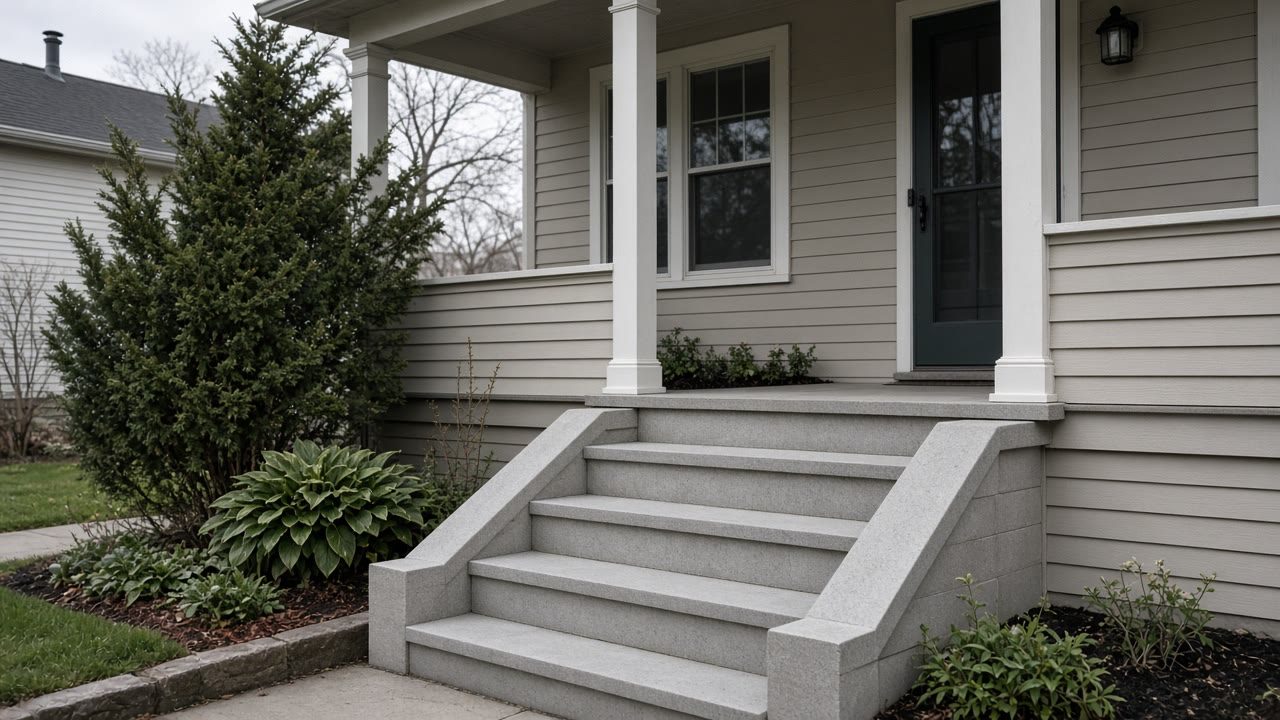
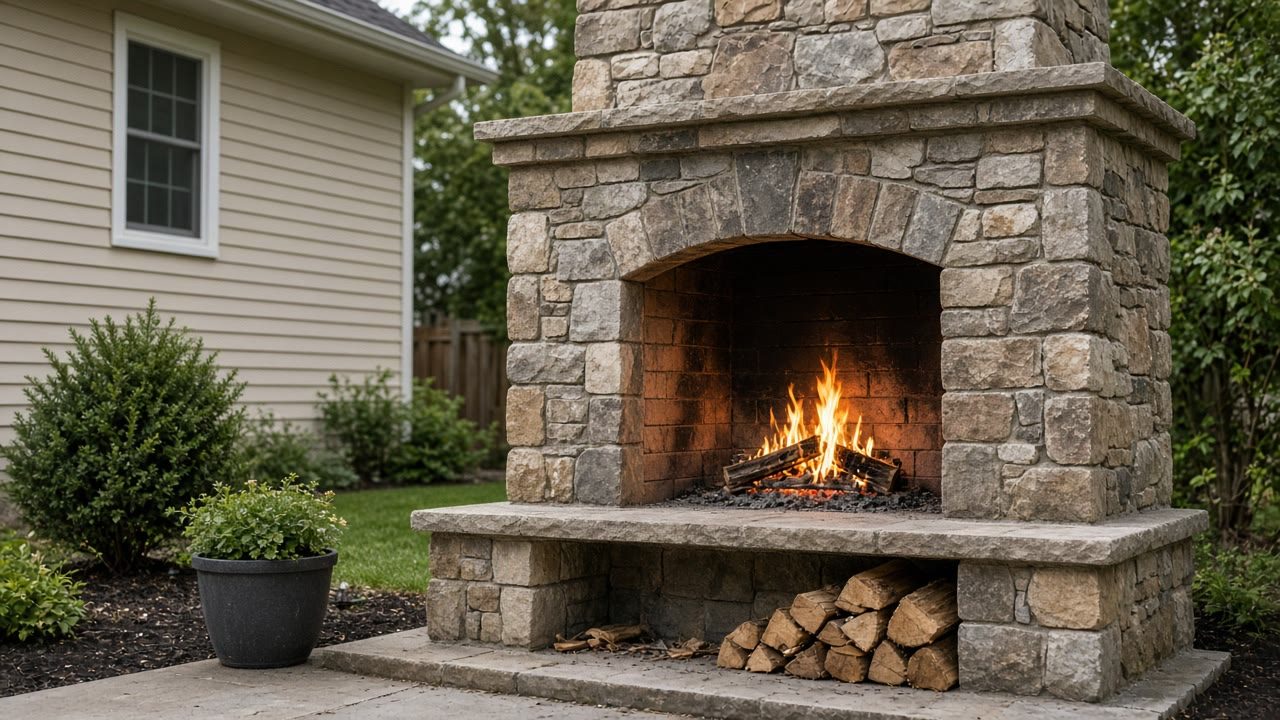
What an outdoor living build covers, and what it does not
When you may not need this at all
- State regulation caps a lawful open outdoor fire at under 3 feet in height and under 4 feet in length, width or diameter, burning charcoal or dry, clean, untreated and unpainted wood only. If the fire bowl in your head is bigger than that, the design has to change before anyone builds it. Your own town, village, city or county is also allowed to be stricter than the state, and some are.
- A large fire feature is not made lawful by being expensive. Size the burning area to the rule first and let the masonry be designed around it.
- If what you actually want is a portable fire bowl on paving you already have, you do not need masonry at all. Check your municipality's ordinance and buy the bowl.
- Two honest masons can quote you different footing depths for the same fire feature and neither has to be wrong. The code exempts small free-standing accessory structures from frost protection entirely, and it also allows footings taken below a frost line that the state does not publish. Get your own code office's figure in writing before you compare the two prices, because one may be pricing 12 inches and the other 48.
- If a seat wall's real job is holding back earth, that is a retaining wall and a different job from an outdoor living build. It belongs with a repair and structural masonry trade rather than here.
- If the masonry that needs attention is your existing chimney or the firebox inside the house, this is not the trade for it. That is repair of existing masonry and it is worth going straight to someone who does only that.
What is out of scope
- Indoor fireplaces, chimney rebuilds, flue relining and repair of an existing masonry chimney.
- Retaining walls, including a seat wall that is retaining earth, and foundation masonry repair.
- Gas piping, electrical and plumbing. Those are separate licensed trades and the masonry is sequenced around their rough-in.
- Appliances and their warranties: grills, side burners, refrigerators, gas inserts, burner pans and ignition systems.
- Pergolas, roofs, decking and any framed structure over the fire feature or the kitchen.
- Engineered foundation design under ASCE 32, which needs an engineer. If anyone proposes that route, the Syracuse design input is an air freezing index of 1,213 degree-days Fahrenheit at the 100 year return period, and you can check it against NOAA's own published table.
- Obtaining permits on your behalf, and any representation about what your municipality will approve.
- Fuel supply, and burning anything other than the charcoal or dry, clean, untreated and unpainted wood the state regulation names.
Towns where we arrange fire features and outdoor kitchens
- Outdoor Living Masonry in Cicero
- Outdoor Living Masonry in Clay
- Outdoor Living Masonry in Manlius
- Outdoor Living Masonry in DeWitt
- Outdoor Living Masonry in Syracuse
- Outdoor Living Masonry in Salina
- Outdoor Living Masonry in North Syracuse
- Outdoor Living Masonry in Liverpool
- Outdoor Living Masonry in Camillus
- Outdoor Living Masonry in Marcellus
- Outdoor Living Masonry in Skaneateles
- Outdoor Living Masonry in Baldwinsville
Footings, fire size and permits: the questions we get
How deep does an outdoor fireplace footing have to go?
Ask your own town or village, and get it in writing. New York publishes no statewide or county frost depth: Section R301.2 says the local jurisdiction establishes the additional criteria, and the frost line depth column of Table R301.2(1) is printed blank for the jurisdiction to fill in. The Department of State's technical bulletin confirms it and lists air freezing index, soil type, water table depth, local historical data and field experience as the inputs a municipality may use. The 42 and 48 inch figures that circulate online came from somebody's field experience, not from the code. What the code does give you is a floor: Section R403.1.4 puts no exterior footing shallower than 12 inches below undisturbed ground, before frost is considered at all.
One contractor quoted a 12 inch footing and another quoted four feet. Which one is wrong?
Possibly neither, and that is the honest answer nobody in this market gives. Section R403.1.4.1 exempts free-standing accessory structures of 400 square feet or less of other than light-frame construction, with an eave height of 10 feet or less, from frost protection altogether, and a garden fire feature can sit inside that. It also allows a footing taken below the frost line, which is the deeper reading. Both quotes can be defensible, and the difference between them is thousands of dollars, so the decision belongs to your code enforcement officer rather than to whichever mason you liked more.
Can we insulate a shallow footing instead of digging to frost depth?
Not for this. Section R403.3 applies only to buildings whose monthly mean temperature is maintained at not less than 64F, and it states that frost-protected shallow foundations shall not be used for unheated spaces such as porches, utility rooms, garages and carports. An outdoor fireplace is unheated construction, so the remaining routes are the frost line depth your municipality sets, an ASCE 32 engineered design, solid rock, or the accessory structure exception.
How big can my fire pit be?
Under 3 feet in height and under 4 feet in length, width or diameter to sit inside the state's exception for campfires and small cooking fires, and only charcoal or dry, clean, untreated and unpainted wood may go in it. Brush burning is prohibited from March 16 through May 14. Towns, villages, cities and counties may pass stricter ordinances than the state, so check yours, and size the masonry to whichever rule is tighter before the stone is ordered rather than after.
Do I need a permit for an outdoor fireplace?
In much of this metro, yes, even where the patio around it needs nothing. The Town of Clay lists fireplaces, stoves and inserts among the work requiring a building permit, and the Town of Cicero lists fireplaces, pellet stoves and wood stoves. Neither town's list names a patio. Cicero also requires a permit before excavating or filling more than 10 cubic yards and a floodplain development permit for any work in a 100 year flood zone. Zoning setbacks are a separate question from the permit and they usually decide where in the yard the thing can go.
What concrete should be in the footing?
New York sits entirely inside the Severe weathering category, which is the worst of the three, so Table R402.2 sets higher minimums than a mild climate would. Porches and steps exposed to the weather require 3,500 psi at 28 days, and exposed vertical concrete requires 3,000 psi, both air-entrained at 5 to 7 percent by volume. Ask to see the delivery ticket. It is the one line item that is easy to shave and impossible to inspect afterward.
Is October too late to start an outdoor kitchen?
October is workable and November is a different specification. The Syracuse normals give October 12.8 nights below 40F and 3.8 at or below freezing; November gives 25 nights below 40F and 15.5 at or below freezing. October is also the wettest month of the year here, at a normal 3.89 inches. So if you are offered an October slot, take it and ask one question: what happens if the job slips three weeks, because that slip changes which cold weather requirements apply and what they cost.
What does New York's home improvement law actually give me on a job like this?
Section 770(3) defines home improvement to include patios, terraces, landscaping, porches and other improvements to a home and the land adjacent to it, so Article 36-A applies. That gives you a written contract carrying the approximate start and substantial completion dates with their contingencies, a progress payment schedule in dollars and cents tied to named stages, notice that pre-completion payments go into a Lien Law deposit or are covered by a bond, a contract of indemnity or an irrevocable letter of credit, and notice that you may cancel in writing until midnight of the third business day after signing. None of that is a concession you are asking for. It is what the statute already requires.
Tell us what you want to build
Rough size, where in the yard, wood or gas. There is no obligation, and we will flag anything the state fire rule would change.