
Onondaga County
Masonry Installation in Manlius: the Lot, Not the Town
Ask for the soil on your own lot to be identified before anybody prices a base in Manlius, because no single soil covers even a tenth of this town. The mapped mix runs from silty clay loam to shallow soils over bedrock, with 31.8 percent of the town classed poorly drained against 29.8 percent well drained.
Request a quote in Manlius
Share a few details so we can confirm coverage and arrange the right next step.
Would you rather talk it through? Call (315) 640-3590, answered 24/7.
$100 off your first job
Credited by us on your first booked job.
- One credit per customer per property, on your first booked job.
- Valid through December 31, 2026.
Mention this offer when you book. Full terms.
Why a Manlius base spec belongs to one address
In the Town of Manlius, 31.8 percent of the mapped soil area is classed poorly drained, somewhat poorly drained or very poorly drained, and 29.8 percent is classed well drained. The town is unusually mixed: Niagara silt loam at about 8.6 percent, Cazenovia silt loam at about 4.5 percent, Benson silt loam at about 4.5 percent, Wassaic silt loam at about 4.1 percent, Teel silt loam at about 3.6 percent and Lockport and Brockport silty clay loams at about 3.6 percent, with no single soil dominating.
Source: United States Department of Agriculture, Natural Resources Conservation Service, Soil Survey Geographic Database for Onondaga County New York, survey area NY067, queried through the Soil Data Access service, accessed 2026-09-14
The Town of Manlius publishes specific thresholds. Any shed or playscape less than 144 square feet does not need a building permit, although the setback requirements for each zone still apply. Deck construction requires a building permit whether the deck is affixed to a structure or stands alone, while replacing rotted flooring, stair treads, railing tops and side spindles and general cosmetic repairs do not. The town states that it does not regulate fencing on private or commercial property unless the fencing relates to a swimming pool, hot tub or spa. No threshold is published for a patio at grade or for a retaining wall.
Source: Town of Manlius, New York, Department of Planning and Development, accessed 2026-09-14
The hardscape industry's own base specification is short and checkable. It states that the thickness of the base is determined by traffic, soil type, subgrade soil drainage and moisture, and climate; that sidewalks, patios and pedestrian areas should have a minimum base thickness after compaction of 4 inches over well-drained soils; that residential driveways on well-drained soils should be at least 6 inches thick; and that in colder climates, continually wet or weak soils will require that bases be thicker.
Source: Concrete Masonry and Hardscapes Association, PAV-TEC-002, Construction of Interlocking Concrete Pavements, accessed 2026-09-14
The 2020 edition of the same technical bulletin put a number on the cold-and-wet adjustment: in colder climates, continually wet or weak soils will require that bases be at least 2 to 4 inches thicker. Applied to the base minimums, that means a patio over continually wet soil in a freeze-thaw climate wants 6 to 8 inches of compacted base rather than 4, and a driveway 8 to 12 inches rather than 6.
Source: Interlocking Concrete Pavement Institute, Tech Spec 2, Construction of Interlocking Concrete Pavements, revised February 2020, accessed 2026-09-14
Have the soil named before the base is priced
Send your Manlius address and what you are planning, and we will arrange quotes that start with a test hole instead of a rule of thumb.
Manlius thresholds: a deck needs a permit, a fence does not
The Town of Manlius publishes real thresholds, which is more than most: a shed or playscape under 144 square feet needs no building permit although the zoning setbacks still apply, a deck needs one whether it is attached or free standing, and fencing is not regulated at all unless it relates to a pool, hot tub or spa. Nothing is published about a patio at grade. Silence is not permission, so call the codes office with your actual dimensions, and remember that the setbacks are usually what decides where a fire feature or a seat wall is allowed to sit. These are the town's rules; if your address is inside Manlius village or Fayetteville village, confirm with the village office which of them takes your application. On the base itself, the industry minimum of 4 inches compacted applies over well drained soil and wants another 2 to 4 inches on wet or weak soil in a cold climate, and in Manlius both cases exist within a few streets of each other.
Areas within Manlius: Manlius village, Fayetteville village
What we install across the Town of Manlius
Stone and Brick Veneer Installation
Put stone or brick veneer on a wall, chimney chase, column or foundation face, with the barrier, flashing and weep screed behind it built as a drainage path rather than as a finish.
Stone Veneer in Manlius →Paver Patios, Walkways and Stone Steps
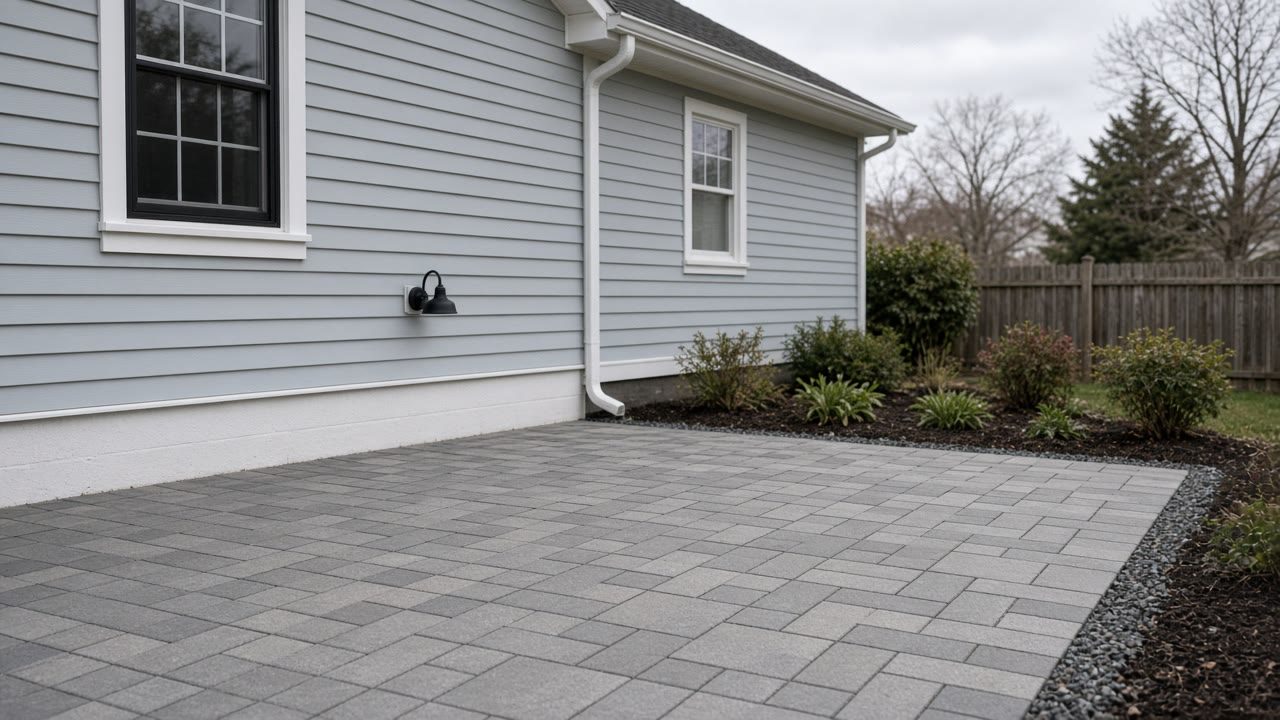
Have a patio, walkway, driveway or set of stone steps built in unit pavers or natural stone, with the base depth, the compaction and the drainage written into the quote as numbers you can check.
Paver Patio Installation in Manlius →Outdoor Fireplaces, Fire Pits and Kitchens
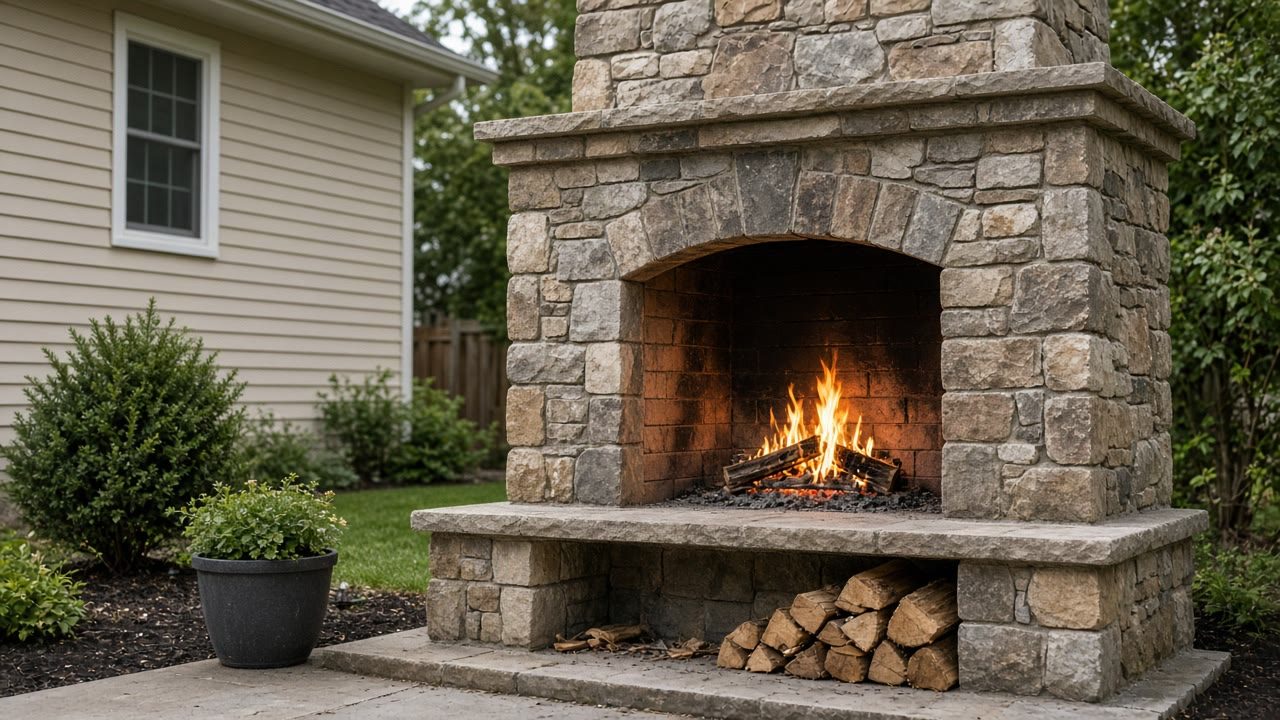
Build a masonry fire feature, outdoor kitchen, seat wall or pillar in the yard, sized to the state's rules on open fires and sitting on a footing your own code office has agreed to.
Outdoor Living Masonry in Manlius →Masonry Cleaning, Efflorescence and Sealing
Find out what the white bloom, the staining or the clouded surface on your masonry is reporting, and whether cleaning or sealing is worth paying for at all.
Masonry Cleaning and Sealing in Manlius →One yard, two soils, three prices
Tell us what you want built and we will help you see where those quotes actually differ.