
Masonry Cleaning and Sealing in Baldwinsville
Most Baldwinsville masonry that has bloomed white needs no sealer, and frequently needs nothing at all.
Masonry Cleaning and Sealing quote in Baldwinsville
Share a few details so we can confirm coverage and arrange the right next step.
Would you rather talk it through? Call (315) 640-3590, answered 24/7.
$100 off your first job
Credited by us on your first booked job.
- One credit per customer per property, on your first booked job.
- Valid through December 31, 2026.
Mention this offer when you book. Full terms.
Why Baldwinsville walls bloom the way they do
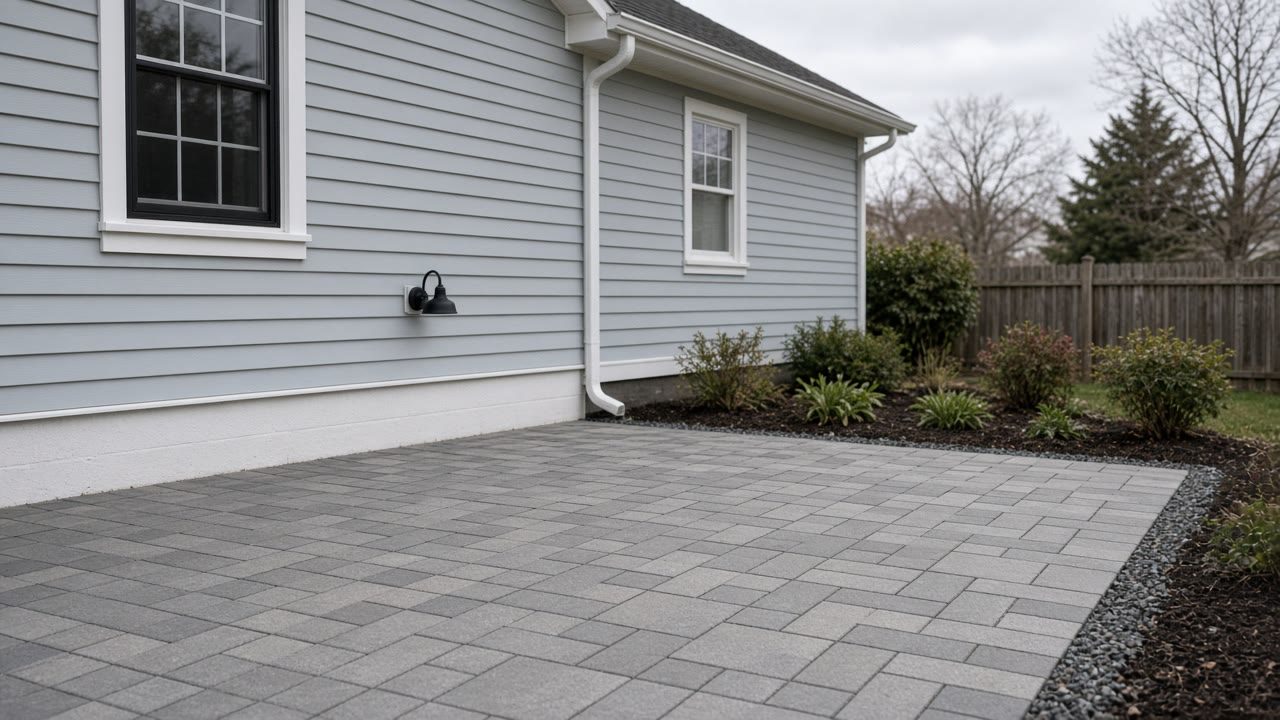
In the Town of Lysander and Town of Van Buren, which together contain Baldwinsville village, 29.8 percent of the mapped soil area is classed poorly drained, somewhat poorly drained or very poorly drained, and 29.2 percent is classed well drained. Lysander, the northern half of the village, has about 29.8 percent poorly, somewhat poorly or very poorly drained soil and about 29.2 percent well drained, with Williamson silt loam at about 6.2 percent, Madrid fine sandy loam at about 6.0 percent and Niagara silt loam at about 4.9 percent. Van Buren, the southern half, is markedly drier at about 18.9 percent poorly drained and about 55.8 percent well drained, dominated by Madrid fine sandy loam at about 15.6 percent.
Source: United States Department of Agriculture, Natural Resources Conservation Service, Soil Survey Geographic Database for Onondaga County New York, survey area NY067, queried through the Soil Data Access service, accessed 2026-09-14
The Census Building Permits Survey counts new single-family housing units authorized by each permit-issuing place, which is the closest published proxy for where new masonry is actually being built. Across 2022, 2023 and 2024 combined, Onondaga County municipalities authorized new single-family units as follows: Town of Lysander 178, Town of Clay 89, Town of Camillus 86, Town of Onondaga 83, City of Syracuse 56, Town of Cicero 37, Town of Manlius 34, Town of Skaneateles 23, Town of DeWitt 17, Town of Van Buren 15, Town of Marcellus 14, Marcellus village 13, Town of Geddes 11, Skaneateles village 9, Manlius village 8, Town of Salina 8, Solvay village 4, Baldwinsville village 2, Fayetteville village 2, Liverpool village 1, and Camillus village, East Syracuse village and North Syracuse village 0 each. In 2024 alone the county authorized 323 new single-family units with a combined reported construction value of about 101.3 million dollars.
Source: US Census Bureau, Building Permits Survey, annual place-level data for the Northeast Region, 2022, 2023 and 2024, accessed 2026-09-14
Ranked by the share of housing units built in 2000 or later, the era in which adhered stone veneer and segmental paver hardscape became the dominant new masonry products, the places of this metro spread very widely. Radisson, the census place inside the Town of Clay, leads at 32.4 percent, followed by the Town of Lysander at 25.8 percent, the Town of Van Buren at 21.9 percent, Baldwinsville village at 20.1 percent, the Town of Cicero at 19.1 percent, the Town of Clay at 15.4 percent, the Town of Camillus at 15.2 percent, the Town of Manlius at 11.6 percent, the Town of Marcellus at 11.3 percent, the Town of Skaneateles at 11.2 percent, Marcellus village at 9.9 percent, the Town of DeWitt at 8.7 percent, Skaneateles village at 8.4 percent, Fayetteville village at 8.1 percent, the Town of Salina at 7.0 percent, the City of Syracuse at 6.4 percent, Camillus village at 6.4 percent, Liverpool village at 6.1 percent, North Syracuse village at 4.7 percent, Manlius village at 4.5 percent, and both East Syracuse village and Solvay village at 0.0 percent. The county figure is 11.6 percent.
Source: US Census Bureau, American Community Survey 2020-2024 5-year estimates, table B25034 Year Structure Built and table B25035 Median Year Structure Built, accessed 2026-09-14
There is no state-wide or county-wide frost depth figure in the New York code. Section R301.2 states that additional criteria shall be established by the local jurisdiction and set forth in Table R301.2(1), and the table's own footnote for the frost line depth column reads: the jurisdiction shall fill in the frost line depth column with the minimum depth of footing below finish grade. The column is published blank.
Source: 2020 Residential Code of New York State, Section R301.2 and Table R301.2(1), Climatic and Geographic Design Criteria, via UpCodes, accessed 2026-09-14
Efflorescence needs three things at once. Technical Note 23A states that soluble salts must be present within or in contact with the masonry, that a source of water must be in contact with the salts long enough to dissolve them, and that a pore structure must be present that allows the salt solution to migrate to a surface where the water can evaporate, driven by a temperature or humidity gradient. It adds that the assumption that the brick causes efflorescence is usually incorrect, because the soluble compounds most commonly originate in the materials in contact with the brick, such as mortar, grout, concrete masonry, concrete or soil.
Source: Brick Industry Association, Technical Note 23A, Efflorescence: Causes and Prevention, accessed 2026-09-14
The hardscape equivalent of the same problem has a named failure mode. The sealing guidance lists the conditions under which a sealer or liquid stabilizer will whiten on a paver surface: the surface and joints are not dry, the pavers have not had an adequate period of exposure to moisture, there is a source of efflorescence under the pavers in the sand, base or soil moving up through the joint sand or the pavers, or the sealer is not breathable, meaning it does not allow moisture to move through to the surface of the paver and evaporate. It adds that if the base under the pavers drains poorly, the sealer is applied to saturated joint sand, or it is applied too thick, the sealer can become cloudy and diminish the appearance of the pavers, and in that situation the sealer must be removed or re-dissolved.
Source: Concrete Masonry and Hardscapes Association, PAV-TEC-005, Cleaning, Sealing and Joint Sand Stabilization of Interlocking Concrete Pavement, accessed 2026-09-14
Sealing is a recurring appearance choice, not a one-time structural upgrade. The guidance states that sealers are applied to add further protection from stains, oils, dirt or water, that most sealers change the appearance of the paver surface by darkening it and enhancing the surface color, and that sealers normally require reapplication after a period of wear and weather, with the interval depending on use, climate and the quality of the sealer. It separately notes that joint sand stabilizers and sealers are two distinct products with overlapping functions, the stabilizer's primary job being to keep joint sand in place against flowing water, wind, aggressive cleaning, tire action and the intrusion of organic matter, seeds and insects.
Source: Concrete Masonry and Hardscapes Association, PAV-TEC-005, Cleaning, Sealing and Joint Sand Stabilization of Interlocking Concrete Pavement, accessed 2026-09-14
A sealer can make the problem worse in a specific, documented way. Technical Note 23A states that applying a coating to brickwork that has a tendency to effloresce, without stopping the mechanisms causing that efflorescence, may lead to degradation of the masonry, and that applying a coating that inhibits evaporation may also lead to degradation. As water and dissolved salts travel toward a coated surface they may be stopped at the inner margin of the coating, usually 1/8 to 1/4 inch below the surface, where the water evaporates through the treated zone as vapor and the salts crystallize inside the masonry. That is called cryptoflorescence or subflorescence, and the Technical Note states these salts can develop tremendous pressures which may result in brick spalling. For that reason, coatings are not recommended as the sole treatment for efflorescence problems.
Source: Brick Industry Association, Technical Note 23A, Efflorescence: Causes and Prevention, accessed 2026-09-14
Masonry should not be cleaned during freezing weather or when freezing weather is expected, because most cleaning methods saturate the wall with water and that water can freeze on or inside the masonry and damage it. Technical Note 1 recommends that water-based cleaning methods be used only if the ambient temperature will be 40 degrees Fahrenheit or above and will remain so until the brickwork is dry.
Source: Brick Industry Association, Technical Note 1, Hot and Cold Weather Construction, accessed 2026-09-14
Efflorescence and sealing on Baldwinsville masonry
The river split shows up here too. Masonry on the wetter northern side has a steadier moisture supply feeding efflorescence than the same masonry a mile south, so identical walls on either bank can behave differently and the one that keeps blooming is not necessarily the one that was built worse.
Whether Baldwinsville masonry needs anything yet
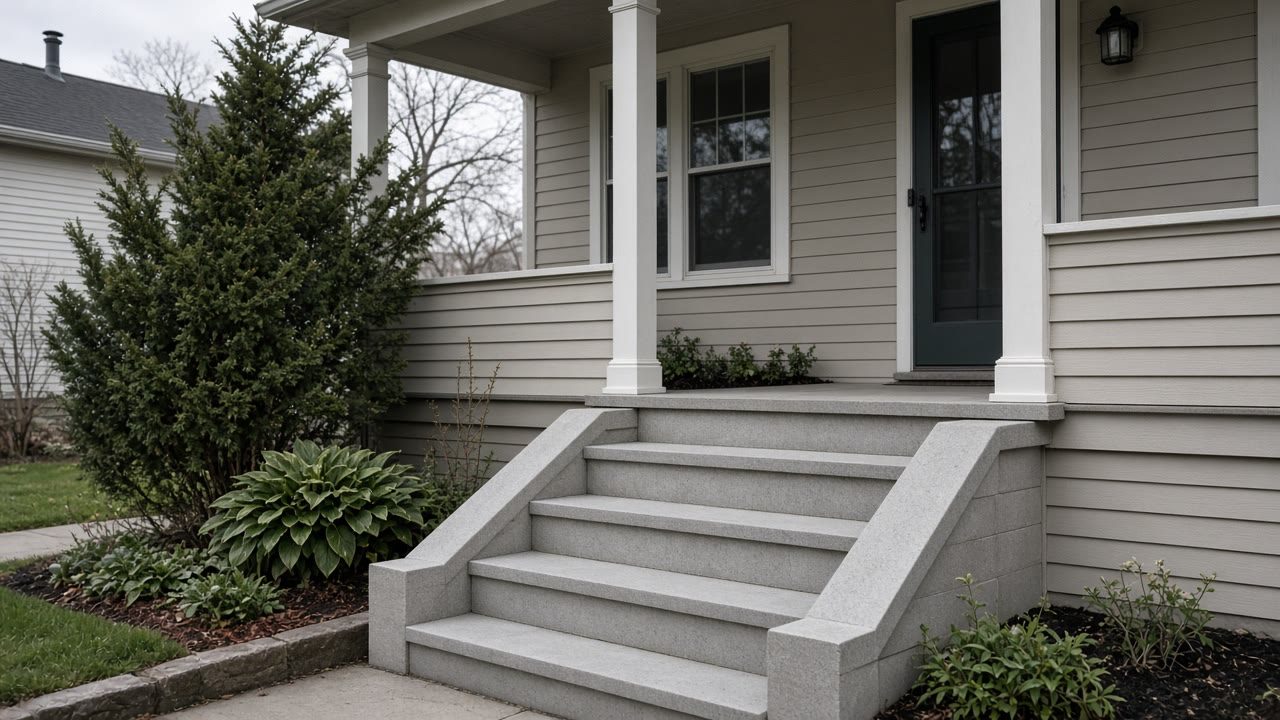
Baldwinsville village straddles the Seneca River, and the two towns it sits in are not the same ground. Lysander, the northern half, is about 29.8 percent poorly drained and 29.2 percent well drained. Van Buren, the southern half, is markedly drier at about 18.9 percent poorly drained and 55.8 percent well drained.
The month decides the specification
Masonry should not be wet cleaned in freezing weather or when it is expected, because cleaning saturates the surface and that water can freeze inside it. This is autumn work that wants to happen before the turn, not after.
What is behind and beneath the work
Efflorescence is salt carried to the surface by water moving through masonry. It is a moisture symptom rather than a fault, cleaning treats the mark rather than the cause, and a sealer applied over a base that is still wet traps what it was meant to keep out.
What to ask whoever quotes
Ask whether the bloom is in its first year. If it is, waiting is often the correct answer and costs nothing.
Tell us what you want built in Baldwinsville
Describe the project and the month you had in mind, and we will tell you what the specification actually needs.
Other masonry we arrange in Baldwinsville
Cleaning and sealing questions from Baldwinsville
Why does Baldwinsville masonry bloom white?
Baldwinsville village sits in two towns, Lysander and Van Buren, and which one your parcel is in decides whose permit rules and frost depth figure apply. For cleaning and sealing the consequence is that how much water reaches the masonry decides how often the bloom returns.
Should I seal it?
Often not, and this is the point where we will talk you out of spending money. Sealing is an appearance decision rather than a structural one, and it is a recurring commitment instead of a single purchase. A product put over a base that is still damp can cloud, and a vapor tight one on masonry that needs to dry outward can do harm. If the surface is in its first year, waiting usually costs nothing and frequently settles it.
Get a Baldwinsville quote you can read
Send the details and we will connect you with licensed, insured contractors who put the base, the drainage and the dates in writing.